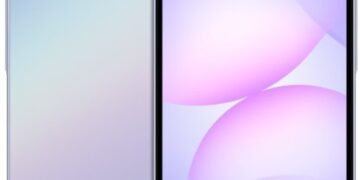






Samsung Galaxy A07 5G 2026 Standard Edition LATAM 128GB Review
Complete review of the 2026 Samsung Galaxy A07 5G LATAM 128GB. Detailed analysis of design, display, battery, cameras, performance, software, and connectivity.
The Samsung Galaxy A07 5G 2026 Standard Edition for the LATAM market is a clearly targeted midrange handset that prioritizes battery life, essential performance, and a large display while keeping the price accessible. Announced on January 13, 2026 and released in February 2026, this model is positioned for users who value long endurance, straightforward software, and broad network compatibility across Central and South America. This review presents a detailed examination of its physical design, display characteristics, processing capability, memory and storage architecture, camera systems, connectivity options, onboard sensors, and charging behavior. Contents include design and build notes, display and multimedia performance, chipset behavior and real world performance, cameras and imaging workflow, battery life and charging scenarios, software features and security, and connectivity and expandability. Each section combines factual specification explanation with practical implications for everyday use to help readers decide whether this A07 5G variant fits their needs.
Design Dimensions and Build
The Galaxy A07 5G shows a pragmatic design approach that emphasizes a large footprint without excessive thickness. Dimensions measure 167.4 mm in height, 77.4 mm in width, and 8.2 mm in depth, translating to a 3.05 by 6.59 by 0.32 inch profile. The handset weighs 199 g which keeps it in a comfortable range for a device with a 6000 mAh battery. The weight distribution and slim profile contribute to reasonable one handed usability for many users even with a 6.7 inch display. The exterior materials are consistent with cost conscious midrange products yet finish and assembly are tuned to feel solid. The build integrates a built in Li ion battery in a single cell configuration which helps deliver the capacity without adding unnecessary thickness.
Physical ergonomics are influenced by the broad width which can make prolonged single handed text input and reach more challenging for users with smaller hands. The handset retains a capacitive multi touch touchscreen that responds to gestures and haptic feedback is included to improve perceived responsiveness. Tactile controls are straightforward and accessible along the frame, and the USB C reversible connector sits at the base for charging and data transfer. A 3.5 mm audio output remains present which is a notable convenience for users who rely on wired headsets.
Ingress protection ratings are described in functional terms rather than a single IP designation. The device provides level 5 protection against solid particles with limited ingress and level 4 protection against water sprayed from all directions with limited ingress. In practical terms this means the phone is guarded against most dust and tolerates splashes or light rain but it is not designed for immersion or heavy pressure water exposure. For daily commuting or incidental exposure this level of protection will be sufficient, but users who expect heavy water exposure should consider supplementary protection.
The back panel hosts the primary camera array and a single LED flash. A fingerprint sensor is included among the sensor set which supports secure unlocking and authentication. The phone supports dual Nano SIM operation in dual standby mode which allows the use of two physical lines simultaneously. Marketed for Brazil, Colombia, Costa Rica, and Peru among other LATAM countries, this model’s design and physical configuration reflect regional preferences for battery longevity and basic expandability.
Display Performance and Multimedia Experience
The Galaxy A07 5G uses a 6.7 inch Color PLS TFT LCD display. The panel has a 720 by 1600 resolution which produces a pixel density of 260 PPI on the 6.7 inch diagonal. Samsung pairs that resolution with a 120 Hz refresh rate which delivers smooth animations and scrolling when compared to standard 60 Hz panels. The display supports 16.8 million colors and offers a measured display area utilization of 84.8 percent which keeps bezels moderate. Scratch resistance is present which helps preserve long term clarity.
A 720p resolution on a 6.7 inch screen is a deliberate trade off. The lower pixel count yields reduced GPU workload and lower power drain when rendering the UI or video content, which benefits battery life. Text sharpness and pixel tightness will not match higher resolution OLED panels, so discerning users who frequently read small text or edit images may notice artifacts and less crisp fine detail. For streaming video, social media, gaming with casual settings, and day to day browsing, the PLS TFT panel produces acceptable colors and contrast for the segment.
The 120 Hz refresh rate is a strong differentiator at this price point. When activated the higher refresh rate makes UI scrolling, app animations, and supported games feel smoother. That said the panel technology is TFT which typically has narrower viewing angles and lower native contrast than Samsung OLED alternatives. Viewing outdoors is functional with an emphasis on readability rather than extreme brightness performance. The horizontal full bezel width is 7.1 mm which frames the screen in a way that is visible but not distracting.
Display real world behavior will depend on settings. Users looking to maximize battery life can lock the display to 60 Hz which reduces refresh related power draw. For those who prioritize smoother interaction, leaving 120 Hz enabled for common tasks will improve perceived fluidity. In video playback tests limited to 1080p sources the device handles common streaming scenarios comfortably, and the 6000 mAh battery can sustain long viewing sessions without rapid drain.
Audio and video interface choices reflect a straightforward multimedia setup. The handset includes a mono loudspeaker and stereo microphone arrangement for clearer voice capture but not a stereo speaker output. The retention of a 3.5 mm headphone jack broadens accessory compatibility for wired headsets and external audio systems. An FM radio receiver with RDS is integrated which remains a practical feature in many regional markets for live local broadcasts and low data listening.
Processor Memory and Everyday Performance
Under the hood the Galaxy A07 5G is powered by the MediaTek Dimensity 6300 MT6835T chipset built on a 6 nm process. The CPU is an octa core configuration with a peak CPU clock of 2400 MHz. The graphics subsystem uses an ARM Mali G57 MP2 GPU running at 962 MHz. For multitasking and runtime responsiveness this configuration is paired with 4 GiB of LPDDR4x SDRAM operating at 2133 MHz. Non volatile storage employs UFS 2.2 technology with a capacity of 128 GB which can be expanded via microSD, microSDHC, or microSDXC cards.
Performance expectations for this platform are pragmatic. The Dimensity 6300 is tuned for efficient everyday tasks rather than top tier gaming. It provides dependable web browsing, social media use, messaging, multimedia playback, and light to moderate multitasking. The Mali G57 MP2 can render many casual to midrange games at playable frame rates, especially when the display is set to its 720p native resolution which reduces the rendering load. Graphically intensive titles will require reduced detail settings to remain smooth and thermals remain conservative thanks to the 6 nm fabrication node.
Memory management with 4 GiB RAM is adequate for the typical user who runs a handful of apps concurrently. Users who rely on aggressive multitasking with a large number of background apps might encounter app refreshes more frequently than on devices with larger RAM allocations. The presence of UFS 2.2 storage gives faster app load times and smoother file transfer performance than eMMC solutions while offering 128 GB as a sensible balance between cost and capacity.
The device supports USB 2.0 with USB HS 480 Mbps speed and USB Host functionality including OTG 1.3. USB PD charging support is present and the maximum charging power rated at 25.0 W allows for relatively brisk recharge cycles for a device with a very large battery. The presence of USB fast charging and USB Host capabilities increases the phone’s utility as a power bank source for other devices in the field. Bluetooth 5.3 provides reliable accessory connectivity and reduced power draw with compatible peripherals.
Thermals tend to be well managed in phones with this class of chipset and conservative clocks. Sustained high CPU load while gaming or prolonged camera operation will lead to moderate warmth in the device back and frame, but extended thermal throttling is unlikely in normal use. Overall the hardware stack aligns with the product positioning of long battery life and dependable daily performance rather than peak benchmark leadership.
Primary and Secondary Camera Capabilities and Imaging Workflow
Samsung equipped the Galaxy A07 5G with a primary rear camera featuring a 50.1 MP BSI CMOS image sensor with 0.64 micrometer pixel size and an aperture of f 1.80. The primary camera supports PD AF for phase detection autofocus and up to 10 x digital zoom alongside a 1.0 x optical baseline. The auxiliary rear camera is a mono CMOS unit registering 1.9 MP with larger 1.75 micrometer pixels and an aperture of f 2.40. This sensor is tuned for depth information and low light sensitivity typical of mono sensors. The camera system includes a single LED flash.
On the front the secondary camera uses an 8.0 MP BSI CMOS sensor with an f 2.00 aperture capable of 1920 by 1080 video at 30 fps. The rear primary camera also records 1920 by 1080 video at 30 fps. Video capture focuses on stability and coloration for everyday content creation rather than high frame rate slow motion or high resolution 4K recording. Camera extra functions include pixel unification which is a pixel binning approach to combine multiple sensor pixels to form larger effective pixels and improve low light performance. Additional software features include HDR photo processing, red eye reduction, slow motion video capture, burst mode, touch focus, panorama photo, face detection, face tagging, smile detection, and face retouch.
Photographic strategy on this handset follows a two lane approach. In bright light the 50.1 MP sensor produces detailed captures when the camera software outputs full resolution images. In low light the pixel unification and HDR algorithms merge pixel data to improve dynamic range and reduce noise at the expense of absolute resolution. The presence of a mono auxiliary sensor helps with depth mapping for portrait modes and can improve contrast in lower light scenes. Users should expect good everyday snapshots, solid selfie performance for social media, and usable video recording for casual content.
Limitations emerge when attempting professional grade imaging or complex multi focal length compositions. There is no telephoto or ultrawide dedicated module in this configuration so geometric framing is reliant on digital cropping or movement. The digital zoom capability up to 10 x is useful for occasional reach but will progressively lose detail beyond conservative zoom levels. Phase detection autofocus provides dependable subject locking for moving subjects in typical daylight.
The camera software suite includes practical features for automation and quick adjustments. HDR processing balances highlights and shadows in scenes with high contrast while burst mode supports action photography. Slow motion capture is available but constrained by frame rate and resolution limits. For users who prioritize imaging versatility with multiple focal lengths and high end video, flagship devices will offer superior hardware. For the target audience of this phone, the primary and secondary camera systems strike a pragmatic balance of quality and cost.
Battery Behavior Charging and Real World Endurance
A defining element of this model is its 6000 mAh nominal battery capacity. The large battery is sealed and built in which allows Samsung to maintain a sleek profile while delivering extended runtime. The battery cell count is a single cell design optimized for energy density and consistent discharge curves.
In practical use the 6000 mAh capacity translates to extended screen on time. For moderate users who combine messaging, web browsing, occasional video streaming, and social media, typical runtimes will reach well into two full days between charges. For lighter usage patterns such as predominantly calls and messaging with infrequent media consumption, three days of operation is achievable. Heavy users who engage in sustained gaming, prolonged GPS navigation, or extended camera recording will still find excellent runtime when compared to similarly sized screens with smaller batteries; however, those activities will draw the expected higher current and reduce total runtime.
Charging is facilitated via a USB C reversible connector with USB PD and support for USB fast charging at up to 25.0 W. This charging power allows a large battery to receive a meaningful top up in a short window while remaining within thermal comfort thresholds. Expect a conventional charging curve where the initial portion of charge is faster and tapering occurs as the battery approaches full capacity. Overnight charging remains convenient and rapid charging sessions during the day can alleviate battery anxiety for traveling users.
Power management benefits from the display resolution choice and the efficient 6 nm chipset. Running the display at 720p and opting into 120 Hz when needed creates an effective compromise between smooth interaction and energy saving. Users can further optimize endurance by selecting battery saving profiles in the software, disabling background app refresh for non essential apps, lowering display brightness in well lit environments, and limiting background location access.
An additional advantage is reverse charging potential via USB Host capabilities. The phone can act as a power source for small accessories or to provide emergency charge to other devices when on the go. This functional flexibility increases the phone’s appeal for users who travel frequently or lack constant access to charging points.
Software Environment Security and User Experience
The Galaxy A07 ships with Google Android 16 which carries the internal label Baklava in the versioning nomenclature and includes Samsung’s One UI 8 overlay. On top of the Android foundation Samsung includes voice command features, integrated navigation software, voice recognition, and face recognition as part of the software extras. One UI 8 continues Samsung’s effort to present a simplified, consistent interface with customizations for regional preferences.
One UI maintains Samsung specific utilities such as device level quick settings, power management modes, and camera app workflows that incorporate the hardware’s pixel unification and HDR capabilities. Voice based assistants and voice recognition allow hands free operation in supported languages which is useful for navigation and simple tasks while driving or when hands are occupied. Face recognition and fingerprint sensor integration supply biometric unlocking options which balance convenience and security.
Security posture is influenced by both hardware and software. The presence of a fingerprint sensor enables biometric authentication which is generally faster and more secure than a PIN alone when properly configured. Samsung’s typical approach to platform updates and security patch distribution is to provide regular updates for current models in the A series while prioritizing flagship devices for extended long term support. The Galaxy A07 5G’s software update cadence and the length of guaranteed updates are set by Samsung policy for the model and may vary by region.
App compatibility is broad thanks to the device’s Android 16 baseline. The 4 GiB RAM is sufficient for mainstream apps and social ecosystems. Power users who want to run numerous background services concurrently will want to manage app processes to avoid unexpected reloads. One UI 8 includes data and app management tools that let users control background activity and optimize battery consumption.
For business use cases the phone supports familiar productivity workflows including email, document viewing and editing apps, and standard mobile office tools. Voice command and navigation software integrated into the platform make it suitable for drivers who need turn by turn directions without diverting attention from the road. For privacy conscious users Samsung’s face recognition and PIN or fingerprint options supply multiple tiers of lockscreen security.
Connectivity Expansion and Regional Compatibility
Connectivity is extensive and reflects the LATAM market orientation. The Galaxy A07 5G supports an array of cellular bands across GSM, UMTS, LTE and NR networks which includes NR bands such as N1 N3 N5 N7 N28 N40 N41 N66 N77 and N78 among others. This broad band support helps maintain compatibility across major carriers in Brazil Colombia Costa Rica and Peru and increases the device’s viability for travelers within the region. Dual SIM dual standby operation enables the use of two active SIM profiles in parallel which is useful for separating personal and business lines or taking advantage of carrier specific data plans.
Cellular data link support includes legacy and modern technologies from GPRS and EDGE to HSPA and LTE with LTE categories that sustain reasonable throughput for common mobile internet usage. NR data links for 5G are supported in multiple band ranges which provides access to next generation mobile speeds where available.
Wireless LAN supports legacy and modern Wi Fi standards 802.11a b g n and ac which ensures broad router compatibility and acceptable throughput on local networks. Additional wireless services include Wi Fi Direct, Wi Fi Tethering, and Wi Fi Calling which enhance peer to peer connectivity and carrier integrated calling over Wi Fi when cellular signals are weak. Bluetooth 5.3 extends robust peripheral connectivity for headsets, wearables, and audio devices with lower power consumption and enhanced pairing stability.
USB functionality comprises USB 2.0 transfer rates with USB HS 480 Mbps performance and OTG host capabilities which facilitate direct file transfers to storage devices and peripheral connectivity. The phone includes USB charging, USB fast charging and USB PD which standardize charging across modern ecosystems.
GPS performance is enriched with simultaneous GPS and assisted satellite services. The device supports GLONASS L1OF Galileo E1 BeiDou B1I and QZSS protocols which increases satellite coverage and positional accuracy in compatible regions. QuickGPS functionality improves initial satellite lock times and geotagging support ensures photos and media can be timestamped with location metadata when permitted.
An FM radio receiver with RDS continues to be a practical feature in regional markets where over the air broadcasts remain widely used. The retention of a 3.5 mm audio jack simplifies in vehicle and wired headset audio use without the need for adapters.
Storage flexibility remains a strong point. The device ships with 128 GB UFS 2.2 internal storage and supports expansion via TransFlash microSD microSDHC and microSDXC. This expandability allows users to offload media, maintain large music libraries, or keep additional offline maps and content without compromising the internal storage pool for apps.
Practical network considerations require buyers to verify carrier support for the specific model number in their country and to confirm which 5G bands their local provider uses. The device’s broad band list improves the odds of compatibility but exact performance depends on the carrier’s deployment strategy.
Final assessment paragraph without title
The Galaxy A07 5G 2026 Standard Edition LATAM 128GB positions itself as a value focused midrange smartphone that emphasizes battery life and practical everyday performance. Its 6000 mAh battery combined with a 720p 6.7 inch 120 Hz display and an energy efficient MediaTek Dimensity 6300 chipset creates a compelling package for users who prioritize long run times, smooth UI interactions, and reliable network coverage across Central and South America. The camera system offers a practical balance of a high resolution primary sensor supported by pixel unification and a mono auxiliary sensor for depth mapping which is suitable for casual photography and social content creation. Memory and storage choices of 4 GiB RAM and 128 GB UFS 2.2 internal storage plus microSD expansion meet mainstream needs while USB PD 25 W charging keeps the large battery accessible during short top up windows. One UI 8 on Android 16 provides a familiar, feature rich interface with voice command and biometric security options. The phone’s physical build and ingress protection levels make it appropriate for daily use in varied environments but not for prolonged immersion in water. For buyers seeking long battery life, dependable performance for common tasks, and broad network compatibility in LATAM markets this model represents a thoughtful balance between capability and cost.