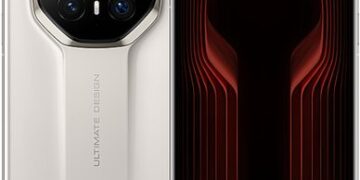






Huawei Mate 70 RS Ultimate Design review
In-depth review of the Huawei Mate 70 RS Ultimate Design 512GB. Analysis of display, camera, performance, battery, software and value for luxury buyers
The Huawei Mate 70 RS Ultimate Design is a premium flagship that blends high end materials with advanced display and camera technology to target buyers who value luxury and technical specification. This review unpacks the core hardware and software features of the PLU AL10 model with 512 gigabytes of internal storage and dual SIM support. Readers will find a compact table of contents that guides the article through design and construction, the display and visual performance, camera system capabilities, compute performance and memory architecture, battery endurance and charging options, connectivity and sensors, and finally a market focused assessment that positions the device for specific buyer profiles. Table of contents includes the following sections in this order Design and materials that define the Mate 70 RS Display technology and real world brightness performance Camera system and photographic capabilities Performance memory and thermal behavior Battery charging wireless and daily endurance Connectivity sensors and security Experience with HarmonyOS and EMUI and finally Who should consider the Mate 70 RS The rest of the article presents a factual, technical and practical assessment of the device based on its published specifications and expected behavior in everyday use
Design and materials that define the Mate 70 RS
The Mate 70 RS Ultimate Design is built to communicate a clear intention of premium positioning. The device measures 164.6 millimeters tall, 79.5 millimeters wide and 8.25 millimeters thick, and it carries a mass of 251 grams. These dimensions place the handset in the large flagship category while its weight reflects the dense materials and larger battery inside. The broader frame is necessary to accommodate the 6.9 inch dual layer AM OLED display, and the thickness remains competitive for a model that includes advanced cooling, a large battery and wireless charging hardware.
Huawei lists the model under a naming convention that references an Ultimate Design series identifier. That lineage suggests a focus on premium finishes and exclusive styling choices such as unique colorways, leather or ceramic back options and camera module treatments that emphasize craftsmanship. The PLU AL10 variant described here is a China market model and the datasheet notes the price in CNY consistent with a luxury product. The chassis is expected to combine metal and glass or ceramic elements to deliver tactile solidity. Haptic feedback is included which indicates attention to input feel and interface refinement.
The device carries the codename PillarU which typically denotes an internal design program rather than a consumer facing label. Physical materials are complemented by fine tuned ergonomics. The 79.5 millimeter width is near the upper end of common phone widths and will feel wide in single handed use for many users. The overall balance among height width and weight aims to render the Mate 70 RS as a handheld centerpiece rather than a compact utility device.
Ingress protection details supplied here depart from the familiar IP numerology used in many markets. The Mate 70 RS is specified with a high level of protection from solids and liquids translating to substantial resistance to dust and aggressive water spray. Those attributes matter to buyers who expect a device to survive adverse conditions without sacrificing fit and finish. The device also supports an infrared emitter which is frequently used for remote control functions when integrated into premium hardware.
The design language also places visible emphasis on camera hardware. The rear camera system lists multiple high resolution sensors and optical modules which are visually expressed in the rear island. The presence of a mono sensor and multiple high resolution auxiliary sensors points to a rear module that is large and sculpted, contributing to an instant impression of capability and engineering.
Overall the material and chassis choices reflect a premium product that prioritizes presence and durability. The physical attributes are consistent with a device intended for users who want spectacle and substance in equal measure.
Display technology and real world brightness performance
At the center of the Mate 70 RS experience is a 6.9 inch AM OLED display that uses a dual layer construction to reach exceptional peak luminance. The panel is specified with a peak brightness as high as 3500 nits which is a standout figure for any smartphone. That peak is most relevant for HDR highlights and direct sunlight legibility. A dual layer OLED architecture is a technical strategy used to combine a high brightness emissive layer with an independent optical or luminance layer that can increase overall output while protecting longevity and color consistency.
The display resolution is listed at 1316 by 2832 pixels which yields a pixel density of 453 pixels per inch at the stated diagonal. That balance delivers sharp text and detailed imagery while preserving battery efficiency when compared with a higher resolution alternative. A refresh rate of 120 hertz is also specified which ensures smooth motion for UI interactions, animations and games that take advantage of higher frame rates. The panel supports approximately 1.07 billion color scales and implements a full array of modern display protections such as scratch resistance, which is important given the large exposed glass surface.
Real world benefit of a peak brightness of 3500 nits is threefold. First highlights in HDR content can show much greater luminance and therefore a wider perceived dynamic range when viewing supported video. Second outdoor visibility improves significantly under direct sunlight when the panel can push more light. Third the display retains readability for camera preview and post capture inspection when shooting in bright conditions. The device also uses a 1 hole arrangement for the front facing camera which maximizes usable screen area while keeping a minimal intrusion in the active display.
Display area utilization at roughly 89.4 percent signals a restrained bezel treatment. The horizontal full bezel width figure is 5.75 millimeters which is modest given the large diagonal and contributes to a more immersive appearance. This combination of high peak brightness high refresh rate and compact bezels positions the Mate 70 RS as a device for users who consume video, play games and expect the latest mobile display features.
The panel specification includes typical smartphone display augmentations such as HDR video support, high color depth and adaptive refresh rate potential. The stated 120 hertz refresh rate can be expected to operate dynamically in real world use to save power when the full rate is not required. Combined with the battery capacity the Display behavior will have a direct impact on daily endurance which is discussed in the dedicated battery section.
Camera system and photographic capabilities
The Mate 70 RS carries a multi element rear camera system that reflects Huawei long term emphasis on mobile photography. The primary sensor reads as a 50.3 megapixel BSI CMOS unit with a wide aperture and an extended tele aperture for dual stage optical performance. The record includes a primary aperture at an equivalent of f slash 1.40 and a tele aperture representation at f slash 4.00 which indicates a variable aperture or a complex optical path used to deliver both bright wide shots and longer reach telephoto imagery.
Optical zoom capability is stated as 3.8 times which denotes the direct optical magnification the system can produce without relying on digital cropping. Digital zoom extends up to 26 times which uses computational techniques to maintain detail across extended ranges. The auxiliary camera sensors are substantial and varied. An auxiliary camera lists 39.9 megapixels with a 13 millimeter equivalent focal length that is consistent with an ultra wide angle objective offering broad field of view for landscape and architecture shots. A second auxiliary camera is 48 megapixels with a 92.5 millimeter equivalent focal length which likely serves telephoto duties, possibly as a periscope style module for longer reach and optical stabilization. An additional mono sensor at 1.6 megapixels suggests specialized monochrome capture for improved detail and contrast in certain shooting modes.
Focus systems include contrast detect AF phase detect AF and laser AF which together provide fast and accurate subject acquisition across lighting conditions. Optical image stabilization and electronic image stabilization are both present which improves low light capture and video stability. Video capture at the rear is capable of 4K at 60 frames per second which satisfies the needs of creators who require high resolution motion capture without compromise. Video features extend to HDR video and slow motion modes which benefit from the high brightness display and advanced processing.
Camera software features include pixel unification, HDR photo and HDR video modes, burst and slow motion capture, refocus and touch focus, panorama, macro mode and intelligent scene detection. Face detection and face retouching features are present for portrait and selfie oriented workflows. This suite of software tools is consistent with a flagship camera approach that combines hardware capability with computational enhancement.
The front camera is a 13 megapixel BSI CMOS sensor behind an f slash 2.40 aperture and can record 4K at 30 frames per second. For users who capture vlogs and high quality self portrait video the combination of a high resolution front sensor and the main display brightness make framing and review more reliable.
In practical photographic terms the Mate 70 RS should deliver strong baseline image quality across wide ultra wide and telephoto ranges. The presence of both OIS and EIS plus a versatile focus array reduces the number of missed shots and makes handheld video feasible at resolutions and frame rates that matter to content creators. The mono sensor and pixel unification functionality are typical Huawei strategies designed to improve dynamic range and low light performance through sensor fusion and post processing.
Performance memory and thermal behavior
The Mate 70 RS is powered by a HiSilicon KIRIN9020 4G chipset built on a 7 nanometer process. The CPU is listed with a 2500 megahertz top clock and an octa core architecture coupled to a Maleoon 920 GPU with an 840 megahertz GPU clock. This silicon pairing emphasizes single device performance and balanced efficiency rather than raw modem throughput since the SoC documentation indicates 4G network capability rather than integrated 5G.
One of the most notable hardware choices is memory configuration. The device ships with 16 gigabytes of LPDDR5 RAM operating at a 4266 megahertz data rate which is a generous allocation for multitasking heavy apps and long term platform usage. Non volatile storage consists of 512 gigabytes of onboard ROM which is ample for large media libraries and demanding application sets. The presence of a non volatile memory interface is confirmed which indicates fast internal storage access and less reliance on slower external expansion. The datasheet states that expansion interfaces are not available therefore storage cannot be increased via microSD which aligns with a luxury fixed storage approach.
In daily use the Kirin 9020 7 nanometer chip will handle most tasks with responsiveness. The octa core design combined with the Maleoon 920 GPU is sufficient for modern mobile games when run at sensible settings and for demanding productivity tasks. Thermal performance will be influenced by the chassis thermal design which must dissipate heat across a compact area. The large battery and metal components help spread heat but sustained heavy CPU and GPU workloads may still produce thermal throttling in prolonged stress scenarios. Huawei traditionally implements active thermal management and software based performance profiles to balance peak throughput and sustained performance. The device supports DisplayPort output over USB C which enables external display workflows and off device compute use.
The absence of 5G on a flagship platform is noteworthy. For buyers who prioritize cellular download and upload speed over other features the lack of 5G may be a trade off to consider. For most everyday application usage and cloud workflows LTE performance remains sufficient and the device supports a broad matrix of LTE bands and advanced LTE link rates which indicate strong carrier compatibility within supported markets.
The software optimization for HarmonyOS 4.3 and EMUI 15 is designed to complement the hardware. Memory management is tuned to keep more apps resident in memory, reducing reloads and improving perceived snappiness. The combination of a high frequency RAM and a modern storage interface minimizes bottlenecks that reduce real world performance.
Battery charging wireless and daily endurance
The Mate 70 RS includes a substantial 5700 milliampere hour battery which is large for a smartphone of flagship class. Battery chemistry is listed as Li ion Si C with a built in single cell configuration. When combined with the display and processor architecture the expected daily endurance is strong for a device with this capacity. The large battery is particularly beneficial for users who leverage the high brightness display for outdoor use or who frequently use the camera and video recording features.
Charging capabilities are a defining feature. Wired charging reaches a maximum of 100 watts. That level of charging power allows for very rapid top ups when time constrained which is useful for heavy users. Wireless charging is supported with Qi protocol and is capable of 80 watts which is an unusually high wireless charge rate in the market. Reverse wireless charging is also implemented which enables the device to act as a power source for other devices in short bursts.
In practice a 100 watt charger will push charge rates that can restore large percentages of the battery in short intervals. This convenience reduces anxiety related to battery life for users who can access a charger. The high capacity battery combined with rapid charging enables flexible usage for creators and power users who need both long runtime and ability to quickly regain charge. Heat management during high speed charging remains an important engineering consideration. Rapid wired and wireless charging both generate thermal load and the device must disperse heat effectively to maintain battery longevity and safety. Huawei has historically applied battery management algorithms and cooling solutions to balance charging speed against longevity.
Wireless charging at 80 watts requires compatible high power charging pads and will be largely limited to the ecosystem offered by the vendor. Reverse wireless enables accessory top ups but will be slower than wired or primary wireless charging.
Overall the battery system in the Mate 70 RS is engineered to remove range anxiety while offering the flexibility of wired and wireless fast charge. Users should expect multi day light to moderate usage and single day heavy usage depending on screen brightness and workload.
Connectivity sensors and security
Connectivity on the Mate 70 RS is comprehensive. The device includes dual nano SIM slots and supports dual standby operation. Cellular compatibility enumerates a long list of GSM UMTS and LTE bands which indicates broad regional support for 4G networks. Supported data link rates include a spectrum of LTE categories and multiple high speed LTE profiles that deliver high throughput where carriers support them. The inclusion of DisplayPort video out via USB C and a USB 3 class interface with USB PD 3.1 compatibility expands the handset utility for productivity workflows with external displays and peripherals.
Wireless connectivity covers modern standards. The device supports Wi Fi 802 11ax which is the latest Wi Fi generation in common consumer hardware and delivers improved throughput and lower latency in compatible environments. Wireless services such as Miracast Wi Fi Direct tethering and Wi Fi calling are available. Bluetooth 5.2 provides stable pairing and accessory support for earbuds smartwatches and peripheral devices.
Near field communication is supported with NFC A and NFC B which enables payment systems and proximity services common in many markets. Infrared transmitter functionality is present which allows the phone to act as a universal remote for home media devices.
Sensors are plentiful and include a 3D accelerometer a 3D gyroscope compass finger print sensor ambient light proximity and a suite of additional sensors such as an altimeter barometer gesture sensor hall sensor P sensor step counter and more. This sensor package allows for precise navigation activity tracking and contextual feature sets including fast and accurate orientation data for gaming and AR applications.
Security is delivered through a combination of biometric options. Face recognition and fingerprint sensor support are listed alongside intelligent personal assistant features and voice recognition. The presence of face recognition and a high performance fingerprint sensor offers redundancy in authentication options and contributes to secure mobile payments system integration.
The satellite navigation stack is robust. The device supports dual frequency GPS A GPS QZSS NavIC and expanded support for GLONASS Galileo and BeiDou services. Dual frequency GPS improves positional accuracy and reduces multipath error in dense urban environments which enhances mapping and location based services.
Taken together the connectivity and sensor features position the Mate 70 RS as a fully connected device capable of acting as a mobile hub for accessories and services while raising the baseline security and navigation capability expected from a premium flagship.
Experience with HarmonyOS and EMUI
Software on the Mate 70 RS runs Huawei HarmonyOS 4.3 with EMUI 15 overlays referenced in the datasheet. The combination yields a device experience that Huawei designs to be integrated with its own ecosystem of devices and cloud services. HarmonyOS emphasizes cross device collaboration and distributed capabilities which enable features such as multi screen collaboration with laptops tablets and compatible displays. EMUI contributions maintain a familiar interface for users who have used prior Huawei releases and help with transition for those upgrading from older devices.
Software extras include voice command navigation AR intelligent personal assistant voice recognition face recognition and a variety of convenience features expected on modern flagships. Those capabilities are tied into sensor and hardware features to provide camera assisted AR capabilities and scene detection algorithms that improve photographic outcomes. Navigation services are augmented by dual frequency GNSS support which improves mapping reliability.
The software environment is tuned to take advantage of the high refresh display and the large RAM allocation. Memory management and background app retention reduce reloads and result in smoother multitasking for pro grade workflows. The vendor also includes a suite of tools for privacy controls and permission management to let users exercise control over what apps access.
One operational consideration is application compatibility and ecosystem integration. Because this model is a China market variant and relies on Huawei proprietary services the availability of certain global third party services may vary depending on region and service agreements. Buyers should verify the availability of specific applications and cloud services in their market when considering purchase. Where the ecosystem is supported the device offers a polished experience anchored by the hardware capabilities highlighted earlier.
Software updates and long term support cadence are critical elements for users who plan to keep the device for multiple years. Huawei has promoted multiple major OS updates for recent flagships and this model is listed with recent HarmonyOS and EMUI versions which indicates ongoing software investment. Users who require guaranteed long term updates for security and feature enhancements should consult regional support policies at time of purchase.
Who should consider the Mate 70 RS Ultimate Design
This device targets buyers who want a premium statement device with top tier display and camera hardware combined with expansive internal memory and rapid charging. The luxury focus is clear from the model designation and the high price point in local currency. The Mate 70 RS is particularly suited to users who value a very bright OLED screen for HDR and outdoor use, who produce photo and video content on the go and who want long battery life paired with very fast recharge options.
Professional content creators who need 4K 60 frames per second capture a versatile optical zoom range and strong stabilization will find the rear camera array appropriate for a wide variety of shooting scenarios. The combination of OIS EIS and multiple focus systems make handheld capture more reliable across photo and video modes.
Power users who rely on heavy multitasking will appreciate the 16 gigabyte LPDDR5 RAM and high speed internal storage. Those who work with large files or who run multiple productivity applications will benefit from reduced app reloads and responsive storage.
Buyers who consider connectivity and future proofing purely in terms of cellular network generation should note that the device is based on a 4G only chipset. If 5G connectivity is a must have for a given carrier or region then this model may not meet that requirement. Conversely if 4G coverage and high speed LTE categories meet the user need then the device provides robust band support and advanced LTE data links.
For customers who prefer luxury materials bespoke finishes and a device that stands apart visually the Mate 70 RS offers a premium option. Consideration should be given to region specific support application availability and warranty terms since the device is listed for China market sales and Asia region distribution in the datasheet. Buyers outside those markets should confirm compatibility with local carriers and services.
Pros for the Mate 70 RS include an exceptional high brightness display a capable multi camera system large battery with very fast wired and wireless charging expansive RAM and storage and a broad connectivity and sensor package. Potential cons include weight and size that impact one handed use the absence of a 5G modem and fixed internal storage without expansion.
Final purchasing guidance is to weigh the importance of the luxury design and camera display strengths against the need for 5G and global software services. For users focused on imaging display quality and premium materials who accept the regional software model the Mate 70 RS presents a compelling proposition.
The Huawei Mate 70 RS Ultimate Design delivers a combination of standout display capability advanced camera hardware substantial memory and fast charging that together make it a serious contender in the premium smartphone space. Its design and material choices reflect a product aimed at individuals who prioritize visual performance creative photography and a flagship feel. Careful buyers should evaluate cellular compatibility and software service availability for their market and consider weight and footprint when assessing comfort in daily handling. Overall the device sets a high bar for brightness photographic flexibility and charging performance within a luxury hardware package that will appeal to a defined segment of the market