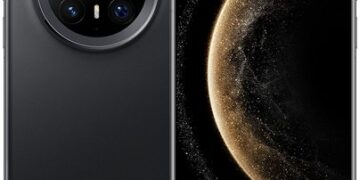






Huawei Mate 70 Pro Dual SIM 1TB PLR-AL00 full review and technical analysis
Detailed review and specs of the Huawei Mate 70 Pro 1TB PLR-AL00, HarmonyOS 4.3, Kirin 9020, 12GB RAM, 6.9 inch AM-OLED, 5500mAh, 100W wired and 80W wireless
The Huawei Mate 70 Pro PLR-AL00 presents itself as a high end flagship designed primarily for the China market, combining a large 6.9 inch AM OLED display, a 12 GB LPDDR5 memory configuration, and an expansive 1 TB of built in storage. Announced on November 26, 2024 and released in November 2024, this top tier Mate variant arrives with a hardware and software package that targets photography enthusiasts, power users who demand long battery life, and consumers who prioritize a large, high fidelity screen. This article provides a structured, in depth review of the device, with a table of contents to guide the reader through design and dimensions, display technology, platform and performance, camera system details, power and durability, and connectivity and real world use cases. Table of contents – Industrial Design and Physical Dimensions – Display Technology and Visual Performance – Platform Performance and System Architecture – Camera System Breakdown and Imaging Capabilities – Battery Charging, Wireless Services and Durability – Connectivity, Sensors and Everyday Practicality The goal is to give a neutral, factual assessment of what this specific Mate 70 Pro variant offers in hardware terms, how those components interact under typical usage, and what buyers should expect when considering this model for purchase.
Industrial Design and Physical Dimensions
The Mate 70 Pro PLR-AL00 follows the recent large format flagship trend with deliberate choices in materials, mass and proportions. Physically the device measures 164.6 mm in height, 79.5 mm in width and 8.2 mm in thickness, which converts to approximately 3.13 by 6.48 by 0.32 inches. At 221 grams the handset sits on the heavier side of modern flagship devices, a weight figure that reflects a large battery, substantial camera hardware and premium construction. The weight and footprint place the phone clearly in the phablet category, with an emphasis on one handed usability tradeoffs balanced against screen real estate and battery capacity. Haptic feedback is listed among the device extras, a deliberate inclusion that aims to make interactions feel more precise and tactile, especially when navigating the large display and using on screen controls.
Ergonomics are governed by the combination of the 6.9 inch display and a modestly thick chassis. The depth of 8.2 mm keeps the device from feeling overly boxy, while the 79.5 mm width will feel wide in one handed operation for users with small hands. The finish and frame materials are not explicitly specified in the datasheet but the design language of the Mate series has traditionally emphasized curved glass and metal frames for a balance of premium feel and structural rigidity. The model codename Pillar suggests an internal design identity focused on robustness, while the inclusion of scratch resistant screen construction confirms attention to surface durability.
The device has a single front display hole for the selfie camera which reduces intrusion into the viewing area compared with larger notches. Horizontal bezel width is 5.75 mm which, when combined with the 89.4 percent display area utilization, results in a visually immersive front face. The display-to-body ratio and thin horizontal bezel are significant because they maintain the readability of text and media at large scale without making the phone feel unwieldy in hand.
Two design choices are worth noting from a practical viewpoint. First, the presence of a substantial camera island at the rear impacts how the device sits on flat surfaces, and with multiple large lens elements and periscope style optics installed, users should expect some wobble when tapping the screen while the device lies face up. Second, the weight distribution with a large battery and camera stack means that the device will feel top heavy to some users when held by the upper third. Those tradeoffs are typical in devices that prioritize extended battery life and advanced imaging over minimal mass.
Overall, the Mate 70 Pro PLR-AL00 is a purposefully sized flagship where ergonomics accommodate a large display and a significant optics package. Its mass and dimensions are consistent with the feature set, and the added haptic refinement and scratch resistant screen indicate that durability and interaction quality were included in the design brief.
Display Technology and Visual Performance
The Mate 70 Pro PLR-AL00 is built around a 6.9 inch AM OLED display with a native resolution of 1316 by 2832 pixels. This resolution yields a pixel density of approximately 453 PPI, producing fine detail across text, images and video. The panel supports 1.0737 billion display scales or color steps, which indicates a 10 bit plus color pipeline capable of rendering smooth gradients and subtle color transitions without banding when properly calibrated.
A 120 Hz refresh rate is supported, matching modern expectations for fluid system navigation, smoother animations and improved responsiveness in supported applications. The combination of high refresh and high pixel density benefits both gaming and everyday scrolling, reducing motion blur and improving perceived speed. The display architecture includes an AM OLED substrate which typically offers deep blacks and excellent contrast, and the screen is explicitly noted as scratch resistant. Display area utilization is 89.4 percent which places the device among the more immersive large screen phones; the slightly wider bezels and the single hole cutout preserve usability while keeping the front relatively uninterrupted.
Beyond raw resolution and refresh rate, several display characteristics matter for real world usage. The combination of high PPI and a wide color depth enables accurate rendering of high dynamic range content when the player and content support HDR. Pixel density at 453 PPI is sufficient to make individual pixels indistinguishable at normal viewing distances, ensuring crisp text and sharp UI elements. The relatively narrow horizontal bezel of 5.75 mm contributes to an uncluttered viewing area and reduces visual distraction at the edges of the screen.
The display hole design benefits front facing camera placement without creating a large notch; this choice improves full screen video playback in landscape, while still allowing a high resolution front camera to be placed centrally for video calls and selfies. The 6.9 inch diagonal places the Mate 70 Pro in the "phablet" category, suitable for users who consume media, edit photos, read documents and use split screen multitasking.
Typical display performance considerations for a panel of this class include peak brightness, color calibration out of the box, and adaptive refresh behavior between 1 and 120 Hz. While the datasheet provides no numeric peak brightness numbers, the combination of an AM OLED panel and adaptive high refresh rate aligns the device with contemporary expectations for high readability outdoors and efficient power use when static content is displayed. Scratch resistance provides a layer of confidence for users who frequently pocket the device without a screen protector, and the overall characteristics indicate a display prioritized for multimedia fidelity and user interaction fluidity.
Platform Performance and System Architecture
Under the chassis the Mate 70 Pro PLR-AL00 deploys the HiSilicon KIRIN9020 4G platform, an octa core 64 bit chipset manufactured on a 7 nm process node. The CPU operates up to a listed 2500 MHz clock speed and is paired with a HiSilicon Maleoon 920 GPU running at 840 MHz. Memory architecture is LPDDR5 SDRAM with a 4266 MHz databus clock and a total 12 GiB RAM capacity on the examined configuration. The non volatile storage is a capacious 1 TB of built in memory, and the device reports support for a non volatile memory interface, indicating the storage is integrated rather than user expandable.
A few architectural items are important to interpret. The chipset designation emphasizes 4G cellular connectivity support in the core modem subsystems, while the platform still delivers high end compute and graphics performance suitable for demanding applications and mobile gaming. The Maleoon 920 GPU with an 840 MHz clock and the LPDDR5 memory at 4266 MHz place the device solidly in flagship performance territory for the period surrounding its release. The octa core CPU plus a high clocked memory bus provide headroom for multitasking, media editing and advanced computational photography workloads.
An integrated DisplayPort A V out implementation over USB Type C is provided, along with USB 3.0 / 3.1 Gen 1 / 3.2 Gen 1×1 data rates and USB HS and SS speeds up to 5 Gbps. Those interfaces enable high bandwidth external displays, fast file transfers and robust power delivery. The device supports multiple USB power delivery profiles including PD 2.0, PD 3.0 and PD 3.1 which enables both high speed charging and compatibility with modern chargers and power banks.
Networking capabilities are broad within the LTE family. The Mate 70 Pro supports a very wide array of GSM, UMTS and LTE bands, along with numerous advanced LTE data link categories. The datasheet enumerates support for LTE throughput profiles ranging through LTE 1000/100, LTE 1200/200, LTE 1400/300 and LTE 1600 profiles, indicating a modem capable of handling aggregated carriers and high theoretical throughput under appropriate network conditions. For markets where 5G is necessary for specific carrier requirements, this particular variant is notable for its emphasis on high end 4G LTE capabilities rather than an integrated 5G modem.
On the software front, the device runs Huawei HarmonyOS 4.3 with EMUI 15 listed as well. HarmonyOS is Huawei’s in house platform adaptation of Android, optimized for multi device interoperability within Huawei’s ecosystem. EMUI 15 presence suggests follow through on Huawei’s user interface evolution, and software extras include voice command, navigation, augmented reality, intelligent personal assistant functionality, voice recognition and face recognition features. Those features interact with the hardware stack to enable camera AI, advanced scene detection and system level voice interactions.
From a performance and thermal perspective, a 7 nm process node gives good energy efficiency for sustained workloads, and the large 5500 mAh battery provides ample capacity to support extended high performance usage. The combination of efficient process, high speed memory, and an advanced GPU should yield comfortable thermal behavior for gaming and content creation sessions, though actual sustained thermal performance depends on vendor applied cooling solutions and software power management profiles.
In practical terms, the platform and memory suite provide a flagship class user experience for multitasking, high fidelity media consumption, and photo and video editing on device. The configuration of 12 GB LPDDR5 and 1 TB storage will appeal to users who require local capacity for large media libraries and productivity work without dependence on cloud storage.
Camera System Breakdown and Imaging Capabilities
Photography and video capture are central selling points for the Mate 70 Pro PLR-AL00. The rear camera array centers on a primary 50.3 MP BSI CMOS sensor with an effective aperture range presented as f 1.40 for wide capture and f 4.00 for tele operation, reflecting a multi aperture or folded periscope style optical arrangement that supports a wide dynamic range of shooting conditions. The primary system supports optical image stabilization and electronic image stabilization, which together improve low light stills and smooth video capture. Video recording capabilities extend to 3840 by 2160 pixels at 60 frames per second, enabling true 4K60 capture suitable for handheld video where stabilization and dynamic range are critical.
Optical zoom capability is specified as 3.8 times optical zoom with a larger 26 times digital zoom available. Those figures position the device as able to handle medium range telephoto work optically, while using digital extension for distant subjects. The listed minimum equivalent focal length of 24.5 mm on the primary camera establishes a wide starting point useful for landscapes and group shots. Focus systems incorporate contrast detection, phase detection, and laser auto focus which provide fast acquisition across scenarios, including moving subjects.
The auxiliary camera complement is diverse. One auxiliary sensor records at 39.9 MP with f 2.20 aperture and a 13 mm equivalent focal length, implying an ultrawide role for architectural and landscape shooting with pixel unification technology available to improve low light performance by combining pixel data. Another auxiliary telephoto sensor is 48 MP with f 2.10 aperture and a 92.5 mm equivalent focal length, delivering longer reach while preserving detail for portraiture and medium range zoom shots. A mono sensor at 1.6 MP is present for depth and luminance calculations, complementing computational photography algorithms to boost dynamic range and texture detail.
The front facing camera is a 13 MP BSI CMOS sensor with f 2.40 aperture capable of 4K video capture at 30 frames per second. Front camera capture benefits from EIS and HDR functionality, making it suitable for vlogging and high quality video calls. Face retouch and face tagging features are present to improve portrait results, and the front system supports intelligent scene detection for optimized exposure and color balance.
Imaging extras are comprehensive. The camera pipeline includes HDR photo and HDR video processing, slow motion video, burst mode, panorama, macro mode, touch to focus, refocus, pixel unification and intelligent scene detection. The presence of both OIS and EIS enables stabilized capture across stills and video, while pixel unification improves low light performance by effectively increasing effective pixel aperture through computational merging. Laser AF aids in quick focus lock in low contrast or low light scenes.
For video creators, 4K60 capture on the rear system is a key capability, and the availability of both OIS and EIS alongside HDR video suggests the phone is intended for creators who want stable, high fidelity handheld footage without external gimbals in most scenarios. Advanced audio capture is supported via three microphones and stereo loudspeakers which together aid in capturing cleaner audio tracks and producing playback that conveys spatial information in video review.
The camera stack and associated software features position the Mate 70 Pro as a comprehensive imaging platform. Photographers will appreciate the variety of focal lengths available, the high resolution sensors that support cropping without large quality loss, and the hardware assisted focus systems that minimize hunting. Computational features such as pixel unification and intelligent scene detection are standard for contemporary flagships and here contribute to the device’s capability to produce polished images across varied lighting conditions.
Battery Charging, Wireless Services and Durability
Power delivery and wireless capabilities are a decisive portion of the Mate 70 Pro’s value proposition. A large 5500 mAh built in Li ion polymer battery is specified, supporting extended usage patterns across day long heavy use. Fast wired charging is provided up to 100 watts maximum, using USB Power Delivery which includes PD 2.0, PD 3.0 and PD 3.1 variants for compatibility with a broad range of chargers. This level of wired charging typically refuels a large battery very quickly, substantially reducing downtime for users who frequently need a rapid top up between outings.
Wireless charging is supported via Qi standard at up to 80 watts maximum. Notably, reverse wireless charging is also implemented, allowing the Mate 70 Pro to act as a power source for compatible accessories and other phones that accept wireless charging. The combination of high speed wired charging with high power wireless charging places the device among models that treat fast charging as a first class feature rather than a convenience add on.
From a durability standpoint the datasheet presents a strong ingress protection profile. Protection from solid materials is described at a level that indicates full dust tight construction, while protection from liquids is described in terms that reflect resistance to high temperature, high pressure spray downs. The numeric immersion specification lists a depth limit of 600 centimeters and a time limit of 30 minutes, which implies the device handles immersion beyond conventional shallow water exposure. This set of attributes corresponds with an IP rating family that offers strong protection in demanding environments, and is significant for users who need confidence in rugged conditions such as outdoor work or recreational use.
The device is built with a single cell internal battery and no user removable battery option, which is consistent with contemporary flagship construction. USB charging services include USB PD compatibility as noted, USB host and USB OTG support for peripheral use, and reversible USB C physical connector for convenience. The presence of both high power wired and wireless charging clarifies Huawei’s intent for the phone to minimize interruptions during heavy daily usage while also supporting modern wireless accessory ecosystems.
Realistic expectations for battery life should account for the large high refresh AMOLED display and sustained high performance use scenarios. While the 5500 mAh capacity is larger than many competitors and will mitigate the increased power draw from a 6.9 inch 120 Hz display, users who enable maximum refresh and push the device with extended gaming and 4K video recording will still observe faster battery depletion than minimal usage scenarios. However, the fast charging suite means recovery time is short even from very low states of charge.
Connectivity, Sensors and Everyday Practicality
Connectivity on the Mate 70 Pro PLR-AL00 is comprehensive and oriented toward a modern flagship feature set. Cellular band support spans a wide range of GSM, UMTS and LTE frequencies, including specific support for TD LTE bands and many global LTE ranges. The device operates as a dual SIM dual standby handset with two Nano SIM slots, enabling simultaneous use of two separate carrier profiles.
Wireless connectivity is robust with Bluetooth 5.2, Wi Fi support including 802.11a b g n ac and 802.11ax, along with wireless services such as Miracast, Wi Fi Direct, Wi Fi tethering and Wi Fi calling. NFC functionality includes both NFC A and NFC B protocols for contactless payments and accessory pairing. For users seeking to attach the phone to external displays, the inclusion of DisplayPort over USB Type C enables direct wired extended display capabilities at high bandwidth.
USB connectivity is USB 3.0 class, with both HS and SS transfer rates including USB SS at 5 Gbps, enabling high speed file movement to external storage and peripherals. USB peripheral services include host mode and OTG 1.3 and 2.0 which are useful for attaching cameras, audio interfaces and storage devices without a computer intermediary.
The audio subsystem features three microphones and stereo loudspeakers with USB Type C audio output. Typical phone functions such as voice transmission, speakerphone, vibrate, ANC, HD Voice and VoLTE and ViLTE are present in the complement of phone services, emphasizing strong telephony and media handling capabilities.
Satellite navigation is comprehensive with simultaneous GPS service, augmented GPS options, dual frequency GPS and support for additional global systems. The device lists compatibility with GLONASS, Galileo, BeiDou including B1c and B2a service signals, NavIC and QZSS. Dual frequency GPS and simultaneous multi system use improve position accuracy, reduce time to first fix and deliver more reliable navigation performance in occluded environments such as urban canyons.
Sensors built into the Mate 70 Pro include a 3D accelerometer, a 3D gyroscope, compass, altimeter and barometer. Additional sensors include a fingerprint sensor, gesture sensor, hall sensor, light sensor, proximity sensor and a step counter. This breadth of sensing capability enables typical smartphone features such as biometric unlocking, movement tracking, contextual UI adjustments based on orientation and ambient light, and advanced fitness monitoring.
Infrared is supported through an IR emitter and infrared data capabilities, which preserve the smartphone’s utility as a remote control for consumer electronics. The absence of an FM radio receiver is explicitly noted, which aligns with many flagship designs that prioritize digital streaming and networked audio over broadcast radio hardware.
Market positioning and price reflect the phone’s intended audience. The device is marketed primarily in China and across Asia, with a listed price of 7999 CNY for this configuration. The combination of HarmonyOS 4.3 and EMUI 15 creates a user interface blend tailored to Huawei device ecosystems and services available in the target markets.
Practical everyday use is shaped by these connectivity and sensor choices. For travelers and commuters, the broad band support and Wi Fi calling compatibility facilitate versatile network use. For creators and remote workers, the high speed USB and DisplayPort functionality make the phone a capable hub for content transfers and external displays. And for health and fitness minded users, the sensor array provides the necessary inputs for accurate activity tracking and outdoor navigation.
The Mate 70 Pro also supports multiple software extras that enhance the hardware. Voice recognition and intelligent personal assistant features extend hands free interactions, and AR and navigation tools leverage the sensor stack and camera system for spatially aware experiences. Together these software capabilities and flexible hardware interfaces create a device that can act both as a personal productivity center and as a content creation tool.
The phone’s overall package suggests deliberate prioritization of imaging, battery endurance and connectivity sophistication, aimed at users who expect their smartphone to fulfill multiple demanding roles without frequent compromises.
This final paragraph summarizes the practical buying considerations and closes the analysis. The Mate 70 Pro PLR-AL00 is a feature dense flagship focused on imaging performance, large scale multimedia consumption and long battery life, with a robust hardware stack including a 6.9 inch AM OLED 120 Hz display, Kirin 9020 chipset and 12 GB LPDDR5 RAM paired with 1 TB of local storage. Buyers focused on photography and video will appreciate the varied focal lengths, OIS and EIS support, and 4K60 recording. Power users will value the 5500 mAh battery combined with very fast 100 watt wired charging and 80 watt wireless charging, while those seeking connectivity breadth will find the extensive LTE band support, DisplayPort over USB C and Wi Fi 6 capabilities appropriate for modern workflows. The device targets the China and broader Asia markets at a premium price point and is engineered for users who prioritize display immersion, extensive local storage and comprehensive imaging tools in a single flagship package.