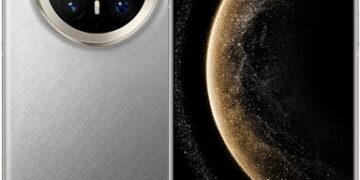






Huawei Mate 70 Pro+ (PLA-AL10) in-depth review and technical analysis
Huawei Mate 70 Pro+ (PLA-AL10) review: 6.9in AM‑OLED, Kirin 9020, 16GB/1TB, 5700mAh, 100W wired/80W wireless, multi‑lens camera and rugged sealing for China market
The Huawei Mate 70 Pro+ (PLA-AL10) represents Huawei’s 2024 flagship approach for the Chinese market: a full-netcom, high-end device that combines an oversized AM‑OLED display, a high-capacity 1 TB storage option, a 16 GB LPDDR5 memory configuration, and an unusually large 5,700 mAh battery with fast wired and wireless charging. Announced on November 26, 2024 and released in November 2024, this Mate-series top trim targets users who prioritize screen real estate, imaging versatility, long battery life, and an uncompromising hardware specification within the constraints of a 4G-native platform. This review pulls the technical attributes together, explains practical implications for daily use, and highlights strengths and trade-offs for buyers who may consider the PLA-AL10 variant. Table of contents: Design and Build — Materials and Ergonomics; Display and Multimedia Performance; Processing, Memory and Storage Architecture; Camera System, Optics and Imaging Capabilities; Power Management, Charging and Durability; Connectivity, Software Features and Practical Considerations. The analysis below uses the device’s published specifications to evaluate its engineering choices and to position the Mate 70 Pro+ for practical ownership.
Design and Build — Materials and Ergonomics
The Mate 70 Pro+ adopts the size and mass profile typical of a large flagship designed to emphasize display and battery capacity. Its physical dimensions measure 164.6 mm tall, 79.5 mm wide and 8.25 mm thick (3.13 x 6.48 x 0.32 inches), with a listed weight of 226 g (7.97 ounces). Those figures place it among the heavier, larger premium phones on the market and they reflect design trade-offs: a 6.9‑inch display and a 5,700 mAh battery will necessarily influence thickness and weight. The device codename is Huawei PillarP and it is both designed and manufactured by Huawei; the listed model specifically references the CN full-netcom 1 TB configuration (PLA-AL10).
Ergonomically, the Mate 70 Pro+ aims for a balance between presence and comfort. The width of 79.5 mm is proportionate to a 6.9‑inch diagonal panel; hands with average span will find reach to the top corners challenging for single-handed operation, but the size supports immersive media consumption and productivity tasks. At 8.25 mm, the depth is reasonable given the battery size; the device avoids extreme thickness while accommodating high-capacity cells and camera hardware. A 226 g mass is noticeable in pockets and during extended single-hand use, yet it contributes a solid, premium feel that many users associate with flagship build quality.
Protection and ingress resistance appear robust on paper. The device is listed with a “6” rating for protection from solid materials—indicating total protection from dust—and a “9” rating for protection from liquids described as “protected against high temperature high pressure spray downs.” The datasheet specifies an immersion depth limit of 600 cm (6 meters) for up to 30 minutes. These specifications align with high-level industrial sealing expectations, and they indicate Huawei engineered the chassis for aggressive environmental resilience that goes beyond ordinary splash resistance. In practice, buyers should still follow manufacturer guidance for warranty and safe immersion practices; such ratings are meaningful but the long-term tolerance of seals depends on usage and wear.
Tactile and finish options are not elaborated in exhaustive detail in the provided datasheet, but the presence of haptic touch feedback and typical premium materials in this product class suggest a combination of glass and metal frames or high-grade composites. The model includes features such as a fingerprint sensor (listed under additional sensors) and gesture sensors for refined interaction patterns. The design accommodates three microphones and stereo loudspeakers to support spatial audio and improved call performance.
For buyers who prioritize pocketability or light weight, the Mate 70 Pro+ should be tested in person; for users seeking long-screen time, large battery capacity, and robust sealing, the device’s physical specification makes a persuasive case.
Display and Multimedia Performance
A core element of the Mate 70 Pro+ proposition is its 6.9‑inch AM‑OLED display. The panel reports a resolution of 1316 x 2832 pixels, a pixel density of 453 PPI, and a color scale depth of roughly 1,073.7 million colors. The display area utilization is specified at 89.4 percent, and the manufacturer lists a 1-hole front camera arrangement rather than a notch or large bezel, reflecting a modern edge-to-edge treatment.
The 120 Hz refresh rate and AM‑OLED technology combine to deliver smooth motion and rich colors. AM‑OLED panels typically provide deep blacks, high contrast, and energy efficiency when rendering darker themes—beneficial for extended battery life in practical use. The density of 453 PPI ensures that text, icons, and high-resolution video appear crisp on the large 6.9‑inch canvas. A horizontal full bezel width of 5.75 mm indicates modest bezels around the display area relative to the device class. Scratch-resistant glass is specified, which adds a layer of practical durability against everyday abrasion.
The resolution format (1316 x 2832) is vertically oriented with a tall aspect ratio, which favors reading, web browsing, and multi-app productivity. For video consumption, most content will display with letterboxing or pillarboxing adjustments depending on native aspect ratio; the large surface area still enhances immersion. The panel’s measured color depth and number of display scales suggest support for wide color gamuts and nuanced HDR rendering, and the specification of HDR photo and HDR video support in camera/processing chains indicates a system-level focus on high dynamic range media.
Multimedia interfaces extend beyond the display. The Mate 70 Pro+ includes DisplayPort output capability over USB Type-C and supports USB 3.0 / 3.1 Gen 1 (USB SS 5 Gbps) rates. That combination allows screen mirroring or direct external displays at higher bandwidths, enabling productive workflows or desktop-like external display use. Wireless services such as Miracast and Wi‑Fi Direct are also supported, offering wireless streaming and local screen casting.
Audio is handled by a stereo speaker configuration and three microphones. Stereo loudspeakers provide wider sound staging for movies and games, while multiple microphones support noise cancellation, improved voice capture, and enhanced hands‑free performance. Audio output uses the USB Type‑C connector (no 3.5 mm jack is listed), so wired audio requires a USB‑C headset or adapter. The overall multimedia subsystem reflects a flagship-class orientation: a large, high-refresh AM‑OLED for visuals and capable wired/wireless audio for sound.
Processing, Memory and Storage Architecture
Under the hood, the Mate 70 Pro+ is built around a HiSilicon KIRIN9020 4G SoC (Hi36C0 GFCV110), a 2024-generation, 64‑bit octa‑core chipset fabricated on a 7 nm process. The CPU clock is specified at 2500 MHz (2.5 GHz) and the graphical controller is the HiSilicon Maleoon 920 GPU with a reported GPU clock of 840 MHz. This SoC is identified as a “4G” variant, which means native 5G modem capability is not part of the platform; cellular connectivity is provided via an extensive LTE and TD‑LTE bandset. For performance expectations: the KIRIN9020 design emphasizes sustained performance and power efficiency for CPU-intensive and GPU-accelerated tasks, but it should be interpreted as an advanced LTE-era flagship SoC rather than a 5G-enabled solution.
Memory architecture is flagship-grade. The Mate 70 Pro+ ships with 16 GB of LPDDR5 SDRAM running at a 4,266 MHz data bus clock. LPDDR5 at 4,266 MHz provides high memory bandwidth suited for heavy multitasking, large RAM-resident apps, and memory-intensive operations such as RAW image processing and advanced computational photography. A 16 GB configuration is designed to reduce background app closure and to enhance multi-window productivity.
Storage is a standout specification: a non-volatile memory capacity of 1,000 GB (1 TB) of internal ROM. The datasheet indicates a non-volatile memory interface is present, implying high-performance flash and a controller that supports sustained read/write performance for large media libraries, video capture, and application storage. No expansion interface is listed, which means storage is fixed; the 1 TB option reflects the highest internal capacity, removing the need for microSD expansion for most users.
The device’s USB stack supports USB PD 3.1 and previous PD versions, USB OTG 1.3 and 2.0, host services, and high-speed transfer modes up to 5 Gbps. Those interfaces enable fast large-file transfer, external accessory connectivity, and use-case flexibility such as external storage or connection to cameras and other peripherals.
From a performance perspective, the SoC + 16 GB LPDDR5 + 1 TB storage forms a high-end combination for most real-world workloads in late 2024 and into 2026. For gaming, the Maleoon 920 GPU at 840 MHz will support high frame rates at moderate to high settings, although top-tier AAA mobile titles in 2025–2026 may push the GPU and thermal envelope. For productivity and camera processing, the memory and storage configuration are generous and eliminate common constraints.
Camera System, Optics and Imaging Capabilities
Imaging is central to the Mate 70 Pro+ hardware story. The primary rear camera is specified as a 50.3 MP BSI CMOS sensor with an aperture range indicated by two numbers: f/1.40 (W) and f/4.00 (T). The presence of both W (wide) and T (telephoto) aperture values suggests the primary module may operate in a variable configuration or that the datasheet lists wide and telephoto apertures across the rear array. The primary system supports optical stabilization (OIS) and electronic image stabilization (EIS) for stills and video, HDR photo and HDR video functionality, slow motion capture, burst mode, touch focus, panorama, face detection and a suite of intelligent scene detection features.
Zoom capability is a key differentiator: the device offers 3.8x optical zoom and up to 26x digital zoom, with an additional telephoto auxiliary module listed as 48.0 MP at f/2.10 and a 92.5 mm equivalent focal length. The primary camera’s minimum equivalent focal length is reported at 24.5 mm, while an ultra-wide or intermediate module is described with a 39.9 MP sensor and a 13 mm equivalent focal length at f/2.20. An auxiliary mono sensor at 1.6 MP is present, which is commonly used to improve detail, contrast, or to enable depth detection modes in post-processing.
Video capture capability is a modern flagship-level configuration: the primary rear system supports 3840 x 2160 (4K) recording at up to 60 fps. Secondary video capture (front-facing camera) supports 4K at 30 fps. The front camera is a 13.0 MP BSI CMOS with f/2.40 aperture and extensive software support including EIS, HDR video, slow motion, and intelligent scene detection functionalities for selfies and video calls.
Autofocus systems are comprehensive: CD AF, PD AF, and Laser AF are listed across the camera array. The combination of phase-detection, contrast detection, and laser-assisted focusing yields fast and reliable focus locking in a wide range of lighting conditions—particularly beneficial for telephoto framing and close-up capture. Optical image stabilization is specified for both stills and video (OIS and OIS video) which helps reduce motion blur and provides steadier handheld 4K/60 footage.
Huawei’s camera extras include pixel unification (pixel binning), face retouch features, refocus, macro mode, and intelligent scene detection. Pixel unification is especially important for improved low-light performance: combining multiple small photodiodes into larger effective pixels reduces noise and increases sensitivity. Given the 50.3 MP primary sensor, pixel binning strategies are likely to produce high-resolution daytime images and effective low-light output.
In summary, the rear camera array offers a broad focal-length spread: ultra-wide (13 mm equivalent), primary (24.5 mm equivalent, 50.3 MP), telephoto (92.5 mm, 48 MP), and mono assist. Together they cover everyday, wide, portrait, and considerable optical telephoto use cases while providing advanced video capture options and stabilization. For photography enthusiasts who value an optical zoom and high-resolution capture with strong stabilization, the Mate 70 Pro+ is positioned as a capable tool.
Power Management, Charging and Durability
Battery capacity is one of the most prominent specifications on the Mate 70 Pro+: a nominal 5,700 mAh built-in Li‑ion (Si‑C) cell. In practical terms, that is significantly larger than the typical flagship battery capacity range of 4,000–5,000 mAh during that era. The large battery capacity is designed to offset the power demands of the 6.9‑inch high-refresh AM‑OLED display and a capable SoC, and to extend runtime for heavy users who run productivity, gaming, video streaming, or extended photography sessions.
Charging architecture is flagship-grade: wired charging is specified at up to 100.0 W maximum, while wireless charging supports Qi standards up to 80.0 W with reverse wireless charging capability listed (Qi reverse). These charging figures indicate very high power delivery on both wired and wireless channels. The presence of USB PD 3.1 support in the USB services list reinforces compatibility with modern power delivery standards and suggests the device will charge rapidly with compatible chargers and cables. Fast wired charging at 100 W should replenish a large portion of the battery in a short time; wireless charging at 80 W—if supported by genuine compatible pads—represents one of the fastest wireless charge rates available.
Thermal management becomes a central practical consideration with such high charging rates and with a large battery: sustained high-power charging cycles generate heat, and thermal control strategies determine charging throttle behavior, longevity, and comfort. Manufacturers typically implement advanced charge controllers, thermal sensors, and charging profiles to balance speed and cell health. For users prioritizing battery longevity, occasional moderation of charging rates or enabling battery health modes is advisable when those options exist.
Durability is supported by the listed ingress protection values: total dust protection and advanced liquid resistance. The datasheet’s unusual phrasing—“9 Protected against high temperature high pressure spray downs”—and the 600 cm immersion depth for 30 minutes are exceptional on paper. Real-world durability should consider the following: connectors, buttons, and protective seals are all subject to wear; wireless charging can be affected by obstructions and case thickness, and water exposure can accelerate corrosion if not properly dried. Warranty coverage for water damage varies by market; users should consult local terms where applicable.
Wireless charging at up to 80 W and reverse charging add convenience: users can rapidly top off the phone or charge accessories on the go. The presence of reverse wireless Qi enables charging companions such as earbuds or smaller phones when needed, though reverse charging rates are normally modest compared to main wireless charging.
Overall battery and charging chemistry choices combined with a sizeable battery cell emphasize endurance-first usage. For power users who prioritize long screen time and quick recharge cycles, the Mate 70 Pro+ delivers a compelling specification set. Practical longevity will depend on charging habits and thermal behavior over the device’s lifetime.
Connectivity, Software Features and Practical Considerations
The Mate 70 Pro+ ships with Huawei’s HarmonyOS 4.3 and EMUI 15 listed in the software environment details. HarmonyOS variants provide a device-centric operating environment with deep integration across Huawei’s ecosystem and tailored services. EMUI 15 appears alongside HarmonyOS, suggesting Huawei’s ongoing approach of converging user experience layers depending on regional and device variants. The software stack includes voice command, navigation software, augmented reality features, an intelligent personal assistant, voice and face recognition capabilities. These software extras align with modern flagship expectations for interaction, privacy, and convenience.
Cellular connectivity is extensive on LTE/TD‑LTE bands. The phone supports an extensive set of GSM, UMTS and LTE frequency bands and a broad range of LTE data link classes, including high theoretical LTE throughputs up to the listed LTE 1600 and LTE 1400/300 classes. The datasheet lists many LTE bands covering global ranges, but the SoC is a 4G solution; that means no native 5G NR support is included in the chipset specification. Practically, buyers should be aware that while the radio bandset is broad and covers many carriers, the device will not connect to 5G networks that require native 5G modem support. For many users on LTE networks this will not materially affect daily performance because advanced LTE categories still allow very high throughput, but in markets where carriers have migrated heavily to 5G and where 5G-only features matter, this device will not provide those native 5G benefits.
Dual‑SIM dual‑standby operation is supported with Nano‑SIM slots for primary and secondary SIM. Complementary phone services include VoLTE and ViLTE, HD Voice, ANC for call clarity, speakerphone, vibrate, and voice transmission features. For voice-first use cases and carrier services, the device provides comprehensive compatibility with modern telephony services over LTE.
Local connectivity includes Bluetooth 5.2, Wi‑Fi 802.11a/b/g/n/ac/ax (including Wi‑Fi 6 / 802.11ax), NFC A/B support, IR (infrared) capabilities, and Miracast/Wi‑Fi Direct/Wi‑Fi tethering features. NFC A/B handles standard contactless payment and pairing uses where supported in the market. The inclusion of IR emitter functionality expands remote-control use cases for home electronics. USB interfaces offer both USB HS (480 Mbps) and USB SS (5 Gbps) transfer rates and a reversible USB-C connector that supports DisplayPort and a host of USB power delivery and OTG services.
Satellite navigation is comprehensive: simultaneous GPS, A‑GPS, dual‑frequency GPS, QZSS, NavIC, GLONASS L1OF protocol support, Galileo E1/E5a/E5b, and BeiDou B1c/B1I/B2a/B2b plus BeiDou voice and SMS support. Dual-frequency GNSS enhances position accuracy and reduces multipath errors, which is useful for mapping, turn-by-turn navigation in urban canyons, and location-based services requiring high accuracy.
Security and sensors include a fingerprint sensor (presumably under-display or side-mounted), built-in compass, 3D accelerometer, 3D gyroscope, altimeter, barometer, gesture sensor, hall sensor, ambient light sensor, proximity sensor, and a step counter. These sensors support health, fitness, navigation, and advanced user-interaction features such as gesture control and precise motion tracking for AR applications.
Market and pricing context: the Mate 70 Pro+ PLA-AL10 variant is listed for the China market and Asia region with a price of 9,499 CNY for the 16 GB / 1 TB configuration. Market availability is region-limited per the datasheet. Prospective international buyers should verify local support, warranty options and compatibility with carrier band plans before purchasing.
Practical considerations for buyers:
- If 5G is a hard requirement, this device’s 4G-focused SoC will not provide native 5G NR access.
- The large battery and fast charging are excellent for heavy daily use but demand thoughtful charging behavior to optimize long-term battery health.
- The camera array and optical zoom capabilities are designed for users who prioritize varied focal lengths and stabilized 4K capture.
- The large display and substantial memory/storage combination supports power users, media professionals, and mobile content creators.
- Regional availability and software ecosystem integration (HarmonyOS and EMUI variants) influence app availability and cloud/service integration compared with other global flagship ecosystems.
Final evaluation paragraph summarizing the device’s position, suitability, and a concise recommendation for target users. The Mate 70 Pro+ PLA-AL10 is an engineering-focused flagship with a clear set of priorities: a large high-refresh AM‑OLED display, a robust imaging array with optical zoom, very large internal storage and memory configuration, exceptional battery capacity with high-speed wired and wireless charging, and advanced ingress protection for more demanding environments. The device’s primary trade-off is the absence of a native 5G modem in an era when 5G deployments are widespread; Huawei compensated with a comprehensive LTE band set and very high LTE throughput classes. For buyers in China and Asia who require long battery life, top-tier imaging versatility, large local storage, and strong physical sealing, the Mate 70 Pro+ is a logical choice. For buyers whose priority is global 5G coverage or who rely on specific 5G-only carrier features, consideration of that constraint is essential.