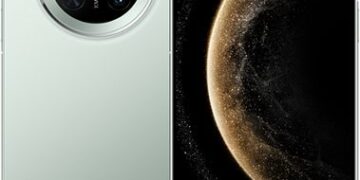






Huawei Mate 70 HarmonyOS NEXT Pioneer Edition: In-depth technical review and buyer guide
Meta description: Huawei Mate 70 Pioneer Edition review: detailed specs, design, display, camera, performance, battery, satellite messaging, and who should buy this 1TB, 12GB flagship.
Strong opening summary and table of contents
The Huawei Mate 70 HarmonyOS NEXT Pioneer Edition (CLS-AL30) positions itself as a technically ambitious flagship designed for users who demand advanced imaging, robust battery life, and a full suite of modern connectivity and software features. Released for the China market with a 1 TB internal capacity and 12 GiB of LPDDR5 RAM, the device emphasizes mobile photography, extended uptime, and unique resilience features including satellite messaging capability when terrestrial networks are unavailable. This review translates the raw specification set into an organized, practical assessment of what the Mate 70 delivers in everyday use and who stands to benefit most.
Table of contents: Design, Dimensions and Durability; Display and Multimedia Experience; Performance, Memory and Power Management; Camera System and Imaging Capabilities; Connectivity, Software and Sensors; Practical Considerations, Price and Market Position; Final assessment and recommendation.
Design, Dimensions and Durability: How the Mate 70 Feels and Protects
Physical design and ergonomics
The Mate 70 maintains the tall, narrow proportions typical of contemporary flagship smartphones. Measuring 160.9 mm in height, 70.9 mm in width and 7.8 mm in depth, it translates to a footprint that is comfortable to hold for users with average to large hands and portable enough for one-handed occasional use. At 203 grams, the device has a perceptible, premium heft that communicates solid construction without being excessively heavy. Those accustomed to lighter midrange phones will notice the difference immediately; the additional mass supports a feeling of durability and balance, particularly when using the camera system or holding the device in landscape orientation.
Materials and finish
The specification set does not list exact frame and back materials in prose, but the combination of an AM-OLED display and a flagship-class component set implies a premium build, likely pairing metal framing with a glass or engineered composite back. The Mate 70’s exterior design choices appear focused on minimizing bezel width—horizontal full bezel measures just 0.83 mm—and providing a near-edge-to-edge display experience that maximizes usable screen area (display area utilization 95.1%).
Ingress protection and real-world resilience
Ingress protection values documented for the Mate 70 specify a protection-from-solids rating at level 6 and protection-from-liquids rating at level 9. Level 6 denotes total protection against dust ingress. Level 9 corresponds to protection against high-temperature, high-pressure water sprays—typically associated with industrial washdown conditions. The datasheet also lists a maximum immersion depth of 450 cm and an immersion time limit of 30 minutes, figures that position the device above typical consumer waterproofing thresholds. For everyday users, the practical takeaway is confidence in the Mate 70’s ability to withstand dusty environments, heavy rain, and occasional water exposure. However, users should still follow manufacturer guidance for warranty and long-term water resistance expectations; "protection against spray downs" differs from sustained submersion reliability in some testing frameworks.
Tactile experience and haptics
Haptic touch feedback is included as a general extra in the specification list. That implies a refined vibration motor and tuned haptics for interface interactions—useful for typing, gaming, and system feedback. The device also lists stereo loudspeakers and multiple microphones, supporting clear voice capture and improved spatial audio during media playback or calls.
Form factor implications
The Mate 70’s dimensions and weight favor a device that performs well for photography and content consumption. The slim 7.8 mm thickness helps maintain a modern look and reduces pocket bulk. The relatively narrow width and tall aspect ratio combined with a 6.7-inch display make it an appealing choice for multimedia, reading, and navigation tasks while remaining manageable for most pockets and small bags.
Display and Multimedia: 6.7-inch AM-OLED, 120Hz, and Audio
Panel characteristics and resolution
The Mate 70 is equipped with a 6.7-inch AM-OLED display with a diagonal measure of 170 mm listed in the datasheet. Resolution is specified at 1216 × 2688 pixels, yielding a pixel density of 441 PPI. That resolution and density support sharp rendering for text, images, and high-resolution video content while striking a balance between visual fidelity and power consumption. The listed number of display color scales (1073.7M) indicates support for an extended color gamut and likely 10-bit color depth, allowing smoother gradients and improved color accuracy in supported content.
Refresh rate and smoothness
A 120 Hz refresh rate provides fluid motion across system animations, scrolling, and supported applications and games. The higher refresh rate can make interactions feel quicker and more responsive, particularly when combined with low touch latency hardware and tuned software animations. For battery-conscious users, the display subsystem in modern devices often includes dynamic refresh rate control; the Mate 70’s display should be capable of adjusting refresh behavior to balance smoothness and battery life depending on the task.
Hole-punch design and bezel management
A single display hole is used for the front camera, contributing to an uninterrupted viewing area and modern front-facing layout. With a horizontal full bezel width of just 0.83 mm, the device maximizes screen real estate and minimizes visual distraction, which is especially beneficial for full-screen content and gaming.
Scratch resistance and durability
Scratch resistance is specified as present on the display. This generally indicates a chemically strengthened glass or comparable protective layer to reduce micro-abrasions and preserve optical clarity over time. Paired with the device’s ingress protection, the display should retain visual clarity and resist common daily wear.
Audio subsystem
Stereo microphones and stereo loudspeakers are part of the audio configuration, offering better audio capture for voice and clearer stereo playback for media. The audio output is handled through the USB Type-C connector, which supports digital audio delivery. Additional audio capabilities—and any spatial audio implementation—depend on software and codec support, but the hardware setup supports the expectation of a premium audio experience for streaming, gaming, and conference calls.
External display and A/V out
The device supports DisplayPort over its USB-C connector, enabling direct video output to external monitors and projectors. This is a practical feature for productivity scenarios such as presentations, desktop-mode workflows, or using the phone as a source for external content. The USB Type-C port supports reversible insertion and USB 3.0 / 3.1 Gen 1 data rates, allowing for fast file transfers to compatible docks and storage devices.
User experience implications
Combined, the high-refresh AM-OLED, high color depth, and relatively high pixel density make the Mate 70 attractive for users who emphasize multimedia consumption, content creation, and mobile gaming. The panel specifications suggest excellent contrast, saturated color reproduction, and smooth motion rendering while features such as scratch resistance and DisplayPort output expand the device’s utility for power users.
Performance, Memory and Power Management
SoC and graphics architecture
The Mate 70 Pioneer Edition is built around a HiSilicon KIRIN9020 4G SoC (Hi36C0 GFCV110), a 7 nm-class octa-core system indicated as being paired with the HiSilicon Maleoon 920 GPU. The CPU clock listed at 2500 MHz and the GPU clock at 840 MHz place the device within the expected performance range for flagship-class hardware of its generation. While the SoC is documented as a 4G design—meaning it lacks native 5G modem support—the remainder of the platform focuses on processing headroom for imaging, UI responsiveness, and sustained workloads.
Memory and storage configuration
RAM is supplied as LPDDR5 SDRAM, operating at a 4266 MHz data bus clock and provided in a converted capacity of 12 GiB. LPDDR5 is the current high-performance mobile memory standard, offering improved bandwidth and energy efficiency relative to previous generations. Non-volatile storage in this Pioneer Edition is substantial: 1,000 GB (1 TB) of internal ROM. That amount of storage suits users who capture large volumes of high-resolution photos and video, install many large applications or games, or store extensive offline media libraries.
Data interface and transfer speeds
USB subsystem information indicates support for USB 3.0 / 3.1 Gen 1 / 3.2 Gen 1×1 along with USB HS (480 Mbps) and USB SS (5 Gbps) speeds. Such support ensures fast wired transfers between the phone and external hosts, and together with USB PD 3.1 capabilities enables higher-power charging and accessory interoperability.
Battery capacity and charging performance
The Mate 70 contains a built-in single-cell Li-ion polymer battery with a nominal rating of 5300 mAh. This capacity is above average for flagship-class handsets and is likely to deliver long full-day or multi-day operation depending on usage patterns. The wired charging ceiling is rated at 66.0 W. At this wattage, the device should achieve substantial top-ups in short periods; however, actual charging curves depend on thermal management and firmware behavior. Wireless charging is supported with Qi and Qi reverse wireless capabilities and a maximum wireless charging power listed at 50.0 W—an unusually high wireless rate that, if realized in real-world conditions, would significantly reduce the typical trade-off between convenience and speed associated with wireless charging.
Power management considerations
Large batteries paired with efficient memory and a modern process node SoC generally translate to extended usage times, but actual battery endurance is a function of display-on time (especially at 120 Hz), cellular usage, camera work, and background processes. HarmonyOS 5’s power management features and dynamic system controls are expected to augment battery life through adaptive refresh rate policies and CPU frequency scaling for lighter tasks.
Thermal control and sustained performance
Sustained heavy workloads—gaming, extended video recording at 4K60, or prolonged CPU-intensive tasks—require effective thermal design to maintain performance without throttling. The combination of a 7 nm SoC and significant battery capacity provides headroom for thermal dissipation, but the device’s actual sustained performance will depend on internal cooling architecture and software throttling thresholds. Users who prioritize continuous high-load performance should consider how firmware updates and usage patterns influence thermal behavior over time.
Practical performance expectations
In everyday terms, the Mate 70 is engineered to meet heavy multitasking and modern mobile application demands. The 12 GiB of LPDDR5 RAM supports robust app switching, and the 1 TB of storage removes common constraints around local content storage. Wired and wireless charging flexibility provides options for rapid replenishment or cable-free convenience.
Camera System and Imaging Capabilities: Optical zoom, sensors and computational features
Camera hardware overview
Huawei positions the Mate 70’s imaging system as a core differentiator. The primary camera is specified as a 50.3 MP BSI CMOS sensor with a wide aperture (f/1.4) and optical image stabilization (OIS). The main lens lists a minimum equivalent focal length of 24 mm, suitable for general-purpose wide-angle capture including landscape, street, and environmental portraits. The main camera supports advanced focusing technologies—contrast detect (CD AF), phase-detect (PD AF), and laser autofocus—creating a comprehensive focus stack for fast and accurate locking in most lighting conditions.
Optical zoom and telephoto capabilities
A notable hardware characteristic is the 5.5x optical zoom rating. This indicates a true, lens-based magnification that preserves image quality without relying on digital cropping. The auxiliary telephoto camera (Aux. 2) is specified as 12.0 MP with an aperture of f/3.4 and a minimum equivalent focal length of 125 mm—consistent with medium-to-long telephoto reach in a smartphone form factor. The combination of optical zoom and high-quality telephoto optics enables distant subject capture with reduced reliance on digital interpolation.
Auxiliary cameras and sensor roles
In addition to the main and telephoto cameras, the Mate 70 includes an auxiliary camera at 39.9 MP with f/2.2 aperture and a 13 mm equivalent focal length—indicative of an ultrawide lens for broad scene capture and creative compositions. A mono 1.6 MP sensor is listed as well, likely functioning for depth or luminance detail capture to support computational photography tasks such as HDR fusion and improved low-light performance. Together, the multi-sensor array supports a strong photographic toolkit: wide, ultrawide, telephoto, and monochrome detail augmentation.
Front camera and video capture
The front-facing camera is a 13.0 MP BSI CMOS sensor with an f/2.4 aperture and supports video recording up to 3840 × 2160 at 30 fps. This enables high-resolution selfie and video-call capture. The front camera also benefits from EIS and various computational enhancements like face retouch and intelligent scene detection.
Stabilization and video capabilities
Both EIS and OIS are included across appropriate cameras and extended to video capture, supporting steadier handheld video recording. The primary camera supports 4K video at 60 fps, a capability that appeals to content creators who shoot action or moving scenes. HDR video, slow-motion capture, and burst modes are provided as well, expanding the device’s versatility for diverse shooting scenarios.
Computational imaging and extras
The Mate 70 lists a range of camera extras: pixel unification (pixel-binning), HDR photo and video, refocus, touch focus, macro mode, panorama, face detection and tagging, smile detection, face retouch for both photos and video, and intelligent scene detection. These features indicate a heavy reliance on algorithmic enhancement: combining sensor data, multi-frame processing and AI-driven scene recognition to produce refined images under a range of lighting and motion conditions. Pixel unification (binning) typically combines multiple sensor pixels into a larger effective pixel to increase light-gathering ability, improving noise performance in low light while maintaining versatile output resolutions.
Low-light and night photography
The combination of a large main aperture (f/1.4), large sensor pixel count, pixel unification and computational algorithms suggests strong low-light performance. OIS helps maintain exposure times without blur, while software-level noise reduction and multi-frame stacking improve detail retention. The presence of both EIS and OIS indicates that the device is equipped to manage stability both optically and via software correction, which is especially helpful for handheld low-light video.
Photography workflow and practical outcomes
For photographers, the hardware provides flexibility: wide shots with the 39.9 MP ultrawide; high-detail standard shots with the 50.3 MP sensor; and distant subject capture via the 5.5x optical telephoto. The inclusion of advanced focus systems and OIS reduces the friction associated with capturing usable images in challenging conditions. Computational features further simplify the process for casual users, while manual controls and high-resolution capture modes will satisfy power users.
Use cases and creative potential
The Mate 70 is designed for users who prioritize mobile imaging without carrying dedicated camera equipment. Landscape, street, travel photography and casual wildlife or sports capture become more feasible thanks to optical zoom and high-quality stabilization. Content creators recording high-resolution video can leverage 4K60 capability, while vloggers benefit from strong front camera capture and stabilization. The device’s large local storage removes the immediate need for offloading footage during extended shoots.
Connectivity, Software and Sensors: Satellite messaging, HarmonyOS 5, positioning and peripheral features
Operating system and software ecosystem
The Mate 70 runs Huawei’s HarmonyOS 5 platform. The software extras listed include voice command, navigation software, augmented reality (AR) features, an intelligent personal assistant, voice recognition, and face recognition. HarmonyOS’s integration with Huawei’s broader ecosystem is designed to enable device-to-device continuity, cross-device services and feature-rich system-level interactions, though the exact experience depends on regional service availability.
Satellite messaging capability
A high-impact feature in the brief is the Mate 70’s ability to send and receive satellite messages even without terrestrial network access. The device supports free text editing and image sending via satellite links, allowing users to maintain basic communications in remote locations or emergencies where cellular or Wi‑Fi networks are absent. This capability is meaningful for outdoor enthusiasts, field personnel, and anyone who values an additional, independent layer of connectivity for critical messages. The practical experience in the field—such as message latency, satellite coverage dependencies and any subscription requirements—depends on the satellite service infrastructure and policies; the hardware support ensures the device can leverage satellite links when available.
Cellular and wireless connectivity
The Mate 70 is specified with an extensive list of GSM, UMTS and LTE bands covering a wide global spectrum of frequencies, including many LTE bands used in Asia and selected bands used in other regions. The chipset is a 4G variant, so the device is designed to operate on LTE data links with multiple peak throughput tiers listed in the data link spec. Wi‑Fi support includes 802.11a/b/g/n/ac/ax (Wi‑Fi 6/6E class compatibility suggested by 802.11ax), and wireless services such as Miracast, Wi‑Fi Direct, Wi‑Fi tethering and Wi‑Fi Calling are included. Bluetooth 5.2 provides modern short-range connectivity with improved throughput and power efficiency for peripherals and audio devices. NFC support includes both NFC A and NFC B, enabling a diverse set of proximity and payment interactions where supported by services.
Positioning, mapping and GNSS performance
Satellite navigation capabilities are extensive: the Mate 70 supports multiple GNSS constellations and services, including GPS with A-GPS and dual-frequency support, GLONASS (L1OF), Galileo (E1, E5a, E5b), BeiDou (B1c, B1I, B2a, B2b, BDS SMS) and regional systems like QZSS and NavIC. Simultaneous GPS and dual-frequency tracking typically improve accuracy and reduce time-to-first-fix, particularly in challenging urban or forested environments. Geotagging and QuickGPS support further enhance the device’s practical utility for navigation and mapping applications.
Peripheral interfaces and expansion
There is no expansion slot for removable storage listed; the device relies on its generous internal 1 TB storage. USB capabilities include host functionality, USB OTG 1.3 and 2.0, and multiple USB PD profiles (including PD 3.1) for accessory and charging flexibility. The inclusion of DisplayPort over USB-C allows external display connectivity, while the presence of an IR transmitter supports remote-control functionality for consumer electronics.
Sensors and input systems
The Mate 70 carries a modern sensor suite: 3D accelerometer, 3D gyroscope, compass, barometer, altimeter, fingerprint sensor (FP), light (L) and proximity (P) sensors, a gesture sensor, hall sensor and a step counter. These sensors underpin a broad array of system and fitness features, from precise orientation detection and gaming input to health and activity tracking. The touchscreen is capacitive multi-touch, which is standard for accurate, multi-finger interactions.
Security and biometric authentication
Face recognition and fingerprint sensor capabilities are listed among the software and additional sensors. These biometric modalities provide fast, secure authentication for device unlocking and application access. The combination of both modalities offers flexibility and redundancy, particularly in scenarios where one method is less practical (for instance, wearing a mask or gloves).
Practical connectivity notes
Because the Mate 70 is a 4G device, users in regions and networks where 5G is a prerequisite for certain enterprise services or the latest network speeds must weigh this limitation. For most daily users, modern LTE throughput combined with Wi‑Fi 6-class support remains adequate for streaming, cloud services, and remote work. The satellite messaging support uniquely complements terrestrial connectivity and may prove decisive for buyers who value off-grid communication.
Practical Considerations, Price, Market Position and Target Buyer
Market availability and price
The Mate 70 Pioneer Edition has been positioned for the China market and Asia region according to the available specification metadata. The listed price is 6,999 Chinese Yuan (CNY) for the configuration with 1 TB storage and 12 GiB RAM. Pricing in local terms situates the device in the premium segment, competing on features and materials rather than low-cost appeal. Prospective buyers outside the device’s primary market should confirm regional availability and network compatibility before purchase.
Who benefits most from this configuration
-
Mobile photographers and content creators: The combination of a 50.3 MP main sensor, 5.5x optical zoom telephoto, ultrawide capability and strong video capture makes the Mate 70 a compelling tool for mobile-first creators who need on-device flexibility, high-resolution capture and stabilization for handheld shooting. The 1 TB of local storage removes a major constraint for creators who shoot large volumes of full-resolution images and 4K60 video.
-
Travelers and outdoor users: Satellite messaging capability, robust ingress protection and a large battery make the device well-suited to users who travel to remote areas. The ability to send texts and images when cellular networks are absent provides a pragmatic layer of safety.
-
Productivity and power users: HarmonyOS 5, DisplayPort output over USB-C and a high-capacity battery combined with fast wired and wireless charging support enable the Mate 70 to serve as both a primary communication device and a productivity hub when connected to external displays or docks.
- Users who value premium hardware but do not require 5G: The Mate 70’s performance, memory and imaging are flagship-grade, however buyers who consider future-proof mobile broadband 5G compatibility essential should weigh the device’s 4G-only design against their connectivity needs.
Comparative strengths and trade-offs
Strengths:
- Robust, multi-faceted camera hardware with optical zoom and high stabilization.
- Substantial local storage and high-speed memory for demanding applications.
- Large battery and fast wired/wireless charging.
- Satellite messaging capability for off-grid communication.
- High-quality AM-OLED display with 120 Hz refresh for smooth visuals.
Trade-offs:
- Absence of native 5G modem capability limits potential peak network speeds compared to contemporaneous flagships that include sub-6 GHz and mmWave 5G.
- Market availability is focused on China and Asia, so international buyers must confirm compatibility and warranty coverage.
- The device’s higher mass may be a detractor for users preferring ultra-light handsets.
Practical buying checklist
- Confirm local network compatibility for LTE bands required by your carrier.
- Verify warranty and service provisions if purchasing in a market outside of the device’s primary distribution regions.
- Evaluate whether the satellite messaging capability aligns with your travel patterns or safety requirements.
- Consider whether 1 TB of storage and 12 GiB RAM match your media creation and multitasking needs; for many buyers these specifications obviate immediate need for external storage.
Final assessment, recommended use cases and closing advice
The Huawei Mate 70 HarmonyOS NEXT Pioneer Edition delivers a focused collection of flagship-class features tailored to imaging, resilience and daily endurance. Its 6.7-inch AM-OLED display with a high refresh rate provides a premium viewing and interaction surface. Performance hardware—an octa-core HiSilicon KIRIN9020 paired with Maleoon 920 GPU—together with LPDDR5 RAM and 1 TB of storage supports sustained multitasking and local media workflows. The camera system is the device’s standout: a 50.3 MP main sensor, a 39.9 MP ultrawide, a 12 MP telephoto with 5.5x optical zoom, and extensive stabilization and computational features position the device as a versatile mobile photography platform. Battery capacity and charging flexibility (66 W wired, 50 W wireless) complement the photography and productivity use cases by supporting long active days and rapid replenishment.
From a connectivity standpoint, the device includes a broad set of LTE bands and advanced Wi‑Fi and Bluetooth standards, but notably it does not include native 5G modem support; this is a deterministic factor for buyers who prioritize the very highest cellular speeds and the broadest future-proof network compatibility. The satellite messaging capability is a strategic differentiator for users who operate in environments with intermittent or no terrestrial coverage and serves both safety and practical off-grid communication needs.
In market positioning, the Mate 70 Pioneer Edition is a premium offering primarily targeted at the China and Asia markets and priced accordingly at 6,999 CNY for this configuration. It will appeal most to content creators, frequent travelers, professional communicators and users who value a blend of imaging depth, battery endurance, and advanced local storage. Before acquisition, prospective buyers outside the primary market should confirm band compatibility and understand service availability for HarmonyOS features in their region.
When evaluating whether the Mate 70 is the right fit, consider these closing practical points: assess the importance of 5G to your daily data needs, confirm the real-world availability of satellite messaging in the areas you travel to, and plan around the device’s non-expandable internal storage by leveraging cloud backup strategies when operating across multiple devices. If the combination of extensive imaging features, long battery life, and off-grid messaging aligns with your priorities, the Mate 70 Pioneer Edition stands as a technically compelling, well-rounded flagship choice.