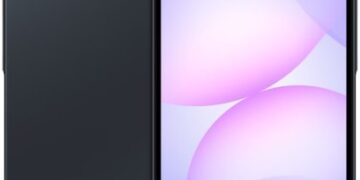






Samsung Galaxy A07 5G (SM-A076B/DS) 2026 Premium Edition — Full Review, Specs, and Buying Guide
A compact yet comprehensive look at the Samsung Galaxy A07 5G (SM‑A076B/DS): release and availability, detailed specifications, display and camera performance, battery and charging behavior, connectivity and regional compatibility, software and security, practical strengths and limitations, and a concise buying guide. Table of contents: Design & build; Display & media performance; Processor, memory and real-world performance; Camera system breakdown; Battery, charging and power management; Connectivity, sensors and expansion; Software, security and extras; Who this phone is for and buying recommendations.
The Samsung Galaxy A07 5G Premium Edition (model SM‑A076B/DS) is Samsung’s 2026 mid‑range offering focused on long battery life, broad network compatibility in Asia, and a large, bright display tailored for everyday multimedia. Announced January 12, 2026 and released February 6, 2026, this Global Dual SIM TD‑LTE variant targets value buyers in India and Southeast Asia with a balance of core features: a MediaTek Dimensity 6300 octa‑core platform, 6 GB of LPDDR4x RAM, 128 GB UFS 2.2 storage, a 6.7‑inch 120 Hz PLS TFT display with high‑brightness mode up to 800 nits, a 50.1 MP rear camera with pixel unification and PD autofocus, and a large 6000 mAh built‑in Li‑ion battery with 25 W charging. This review breaks down the technical specifications and practical implications of those choices, examines strengths and tradeoffs, and offers concrete guidance for prospective buyers and decision factors for different usage profiles.
Design and build: dimensions, durability, and ergonomics
Samsung designed the Galaxy A07 5G to prioritize practicality. The physical dimensions are 167.4 mm in height, 77.4 mm in width and 8.2 mm in depth (3.05 x 6.59 x 0.32 inches), producing a device that is tall and reasonably wide by current smartphone standards. At 199 g (7.02 ounces) the handset sits in the heavier mid‑range bracket largely because of its 6000 mAh battery. The weight and tall form factor make it comfortable for two‑handed use and well suited for media consumption, but single‑hand operation will be a stretch for users with smaller hands.
Ingress protection details indicate resistance to dust and light water exposure: the phone is rated at level 5 for protection from solid materials (protected against dust with limited ingress) and level 4 for protection from liquids (protection against water sprayed from all directions, limited ingress). These design choices mean the A07 5G is prepared for everyday environmental hazards—dusty conditions and light splashes—but it is not intended for immersion or heavy water exposure. Buyers should treat the protection as practical resilience, not full submersion capability.
Physically the device includes a scratch‑resistant screen layer, which helps sustain the display in daily pocket and bag scenarios. The chassis and finish prioritize durability and cost‑effective manufacturing; the design emphasis is functional rather than premium metal or glass aesthetics. The phone includes a 3.5 mm audio jack, a USB‑C reversible connector, and a rear camera assembly placed in a conventional arrangement for this class. Haptic touch feedback is included for improved tactile response in UI navigation.
Ergonomics summary:
- Bulk and weight reflect the large battery capacity; expect solid in‑hand feel and longer endurance.
- Buttons and ports are arranged for standard reach; USB‑C provides reversible convenience and compatibility with modern chargers.
- Dust and spray resistance are practical for outdoor and daily use, but avoid submersion.
- The screen scratch resistance adds longevity; consider a screen protector for rigorous use.
Display and media performance: 6.7" 120Hz PLS TFT, high brightness, and real‑world viewing
Samsung equips the Galaxy A07 5G with a large 6.7‑inch Color PLS TFT LCD. The panel is configured at a 720 x 1600 resolution, producing a pixel density of approximately 260 PPI. The display supports 16.8 million colors and a 120 Hz refresh rate, which contributes to visually smoother animations and scrolling when compared to standard 60 Hz panels. For everyday tasks, social media browsing and casual gaming, the 120 Hz refresh rate delivers perceptible fluidity. For power‑intensive gaming at higher visuals, the system will balance frame rate with thermal and power constraints, but for general UI responsiveness and non‑competitive play the higher refresh rate is a meaningful upgrade.
A distinguishing feature for outdoor use is the phone’s high brightness mode (HBM) that reaches up to 800 nits. For a PLS TFT LCD panel at this price point, 800 nits of HBM improves visibility under direct sunlight and bright outdoor lighting, making the phone more usable for navigation, photography framing, and media consumption outdoors. The display area utilization sits at 84.8%, with horizontal full bezel width reported at 7.1 mm; bezels are visible but not excessive.
Strengths and tradeoffs:
- Strength: 120 Hz refresh rate makes UI navigation and supported content feel smooth.
- Strength: High brightness mode up to 800 nits enhances outdoor readability; useful in bright climates where the A07 5G is marketed.
- Tradeoff: 720p resolution on a 6.7‑inch panel results in modest pixel density (260 PPI), so fine text and high‑detail imagery lack the crispness of FHD+ panels. For average users and video streaming at 720p/1080p, the visual experience remains acceptable, but power users who prioritize pixel density may prefer higher resolution alternatives.
- Tradeoff: PLS TFT is not an AMOLED display; contrast and deep blacks will not match Samsung’s OLED panels.
Multimedia features are practical rather than premium: a single mono loudspeaker provides sufficient volume for notifications and casual media but will not reproduce stereo separation. The presence of a 3.5 mm headphone jack is a notable convenience for users who rely on wired audio or have headphones without Bluetooth. The display combined with 120 Hz offers a capable platform for mainstream streaming and social media, but cinephiles who seek maximum resolution, HDR support and OLED contrast should consider other models.
Processor, memory and real‑world performance: Dimensity 6300, LPDDR4x RAM and UFS 2.2 storage
At the heart of the Galaxy A07 5G Premium Edition is the MediaTek Dimensity 6300 (MT6835T), a 6 nm octa‑core 64‑bit chipset paired with the ARM Mali‑G57 GPU. The CPU clock is listed at 2400 MHz and the GPU clock at 962 MHz. This chipset is engineered for efficient 5G connectivity and competent everyday performance in the mid‑range segment. The platform supports mainstream applications, multitasking and moderate gaming workloads while maintaining thermal efficiency that conserves battery life.
Memory and storage configuration:
- 6 GiB LPDDR4x RAM with a data bus clock around 2133 MHz; user‑accessible RAM is approximately 5489 MiB.
- 128 GB internal storage implemented with UFS 2.2 interface, offering faster app installation and load times than older eMMC storage.
- Expandability: a microSD card slot is supported (TransFlash / microSD / microSDHC / microSDXC), enabling storage expansion for media and offline content.
Real‑world expectations:
- Daily productivity tasks—email, messaging, multiple browser tabs, social media—will run smoothly within the 6 GB RAM limit. Occasional app restarts can occur when many heavy background processes are active.
- Light to moderate gaming runs acceptably on this chipset with medium settings for graphically demanding titles; the Mali‑G57MP2 handles shader workloads reasonably. Competitive esports titles will likely require graphical compromises to sustain higher frame rates.
- UFS 2.2 storage helps reduce app load times and improves general responsiveness compared to entry‑level storage technologies.
- Thermal and sustained performance are balanced for long sessions thanks to the 6 nm node, though prolonged high CPU/GPU stress will generate heat and potentially throttle performance.
Storage and memory advice:
- If you install many large apps, record video frequently, or keep a large media library, plan for microSD expansion to supplement the 128 GB internal storage.
- For consistent multitasking and heavier workloads, users may notice the limits of 6 GB RAM; consider whether background app retention and future app requirements align with this capacity.
Camera system breakdown: 50.1 MP main, mono auxiliary, and software imaging features
The Galaxy A07 5G’s imaging capabilities center on a 50.1 MP rear main camera featuring a BSI CMOS sensor with 0.64 micrometer pixel size, an f/1.8 aperture and PD autofocus (phase detection). The optics provide a native 1.0x optical zoom and up to 10x digital zoom. Complementing the main sensor is a 1.9 MP mono auxiliary camera with 1.75 micrometer pixel size and an f/2.4 aperture, which helps the primary camera with depth and scene information rather than acting as a full wide/telephoto module. On the front is an 8.0 MP BSI CMOS selfie camera with an f/2.0 aperture.
Key camera features and modes:
- Pixel unification: uses sensor binning or pixel merging to combine data from multiple pixels into larger effective pixels, improving light capture in low light situations at the cost of final megapixel output for certain modes.
- HDR photo: extended dynamic range processing for high contrast scenes.
- PD AF: phase detection autofocus for faster subject lock and tracking.
- Additional functions include red‑eye reduction, slow motion capture, burst mode, touch focus, panorama, face detection/tagging, smile detection and face retouch.
- Video recording capability tops out at 1920 x 1080 (1080p) at 30 fps for both primary and secondary cameras.
Practical imaging considerations:
- Daylight performance: the 50.1 MP sensor with pixel unification and f/1.8 aperture is designed to deliver clean and detailed shots in good light. Pixel binning will prioritize image quality and noise reduction for everyday shots.
- Low light performance: pixel unification and the large effective sensor area help, but the combination of small individual pixel size (0.64 µm) and a mono auxiliary sensor indicates that ultra‑low light photography will still show noise and detail loss compared with higher‑end sensors and larger pixel sizes. Night mode processing can mitigate noise, but expectations should be tempered.
- Zoom: optical zoom is limited to 1.0x; the 10x zoom is digital and will show degradation in detail as magnification increases. Use digital zoom conservatively.
- Video: 1080p30 capture is adequate for social sharing and casual recording, but there is no 4K recording or high‑frame rate options for slow motion beyond the advertised slow motion feature. Stabilization details are not specified in the datasheet; avoid assuming advanced stabilization performance.
Selfie and front camera:
- The 8 MP front camera supports HDR and typical portrait/selfie features. It is oriented toward social media and video calling rather than professional selfie imaging.
Overall camera verdict:
- The camera system offers a capable, pragmatic set of tools for everyday photography—good daylight performance, basic low light improvements via pixel unification, and a rich set of software photography modes. It is not designed to compete with flagship multi‑sensor systems, but it addresses the needs of the target audience with sensible software and hardware tradeoffs.
Battery, charging and power management: 6000 mAh capacity, 25 W charging, and practical endurance
A defining commercial element of the Galaxy A07 5G is its 6000 mAh nominal battery. This capacity is above average for contemporary mid‑range phones and aligns with the device’s emphasis on extended usage. The battery is a built‑in Li‑ion single‑cell design, and in practical terms this translates to several key user benefits.
Expected endurance:
- The large 6000 mAh cell combined with a 6 nm chipset and a 720p display (which consumes less power than higher resolution panels) typically delivers multi‑day battery life under moderate use. Typical usage patterns—messaging, streaming short videos, phone calls, browsing and light gaming—can expect a robust single‑charge experience.
- The presence of a 120 Hz refresh rate provides smoother UI interactions, but it may reduce peak battery life if the high refresh mode is used continuously. The system likely supports adaptive refresh behavior or user selection to conserve energy; users who prioritize battery life can set the display to 60 Hz where available.
Charging:
- Max charging power is 25.0 W, and the device supports USB PD and fast charging over USB‑C. A 25 W charging rate provides reasonable top‑up speed for large batteries: expect longer overall charge times than smaller batteries, but the fast charging capability makes daily top‑ups practical.
- USB services include USB Host, USB OTG 1.3 and USB PD support, enabling accessory use and more flexible charging options (power banks, laptops with USB‑C adapters, etc.)
Practical recommendations:
- For all‑day and multi‑day use, keep power‑saving features enabled when extended uptime is needed. Use 60 Hz refresh where battery life is the priority.
- When purchasing, ensure your charger supports 25 W USB PD to realize the faster charging speed; bundled chargers vary by market.
- Because the battery is built‑in, standard battery replacement requires authorized service; factor that into long‑term ownership planning.
Connectivity, sensors and expandability: networks, bands, and physical interfaces
The Galaxy A07 5G is built as a globally capable dual‑SIM handset primarily aimed at Asian and Southeast Asian markets, including India, Indonesia, Malaysia, Thailand, Vietnam, Sri Lanka and Myanmar. The device supports a broad array of cellular bands—multiple GSM, UMTS, LTE and NR bands—covering both sub‑6 GHz 5G and TD‑LTE bands commonly used in the target markets. Notable support includes NR bands N1, N3, N5, N7, N8, N26, N28, N40, N41, N66, N77 and N78 as well as numerous LTE bands, ensuring broad compatibility with regional carriers.
Data links:
- Supports legacy and modern cellular data links: GPRS, EDGE, UMTS/HSPA variants, DC‑HSDPA, and LTE with listed uplink/downlink profiles, as well as NR 1500 and NR 2600 for 5G data links.
SIM and dual operation:
- Dual SIM operation uses Nano‑SIM (4FF) cards and supports dual standby. This arrangement is convenient for travelers, business users, and regional buyers who need separate carrier profiles.
Wireless connectivity:
- Wi‑Fi: supports 802.11a/b/g/n/ac with features such as Wi‑Fi Direct, Wi‑Fi tethering and Wi‑Fi Calling for VOIP over LTE/Wi‑Fi.
- Bluetooth: 5.3 for improved device pairing stability, lower latency and better energy efficiency for connected accessories.
- GPS and satellite services: simultaneous GPS, A‑GPS, QZSS, GLONASS L1OF, Galileo E1 and BeiDou B1I provide comprehensive navigation capabilities and quick satellite fix times. Geotagging and QuickGPS support are included.
- FM radio: a built‑in FM receiver (76–108 MHz) with RDS is present, useful where broadcast radio remains common.
- NFC is not explicitly listed in the provided attributes—verify local variants if NFC functionality is required for payments or secure access.
Sensors and user interface hardware:
- Standard sensor suite includes a built‑in compass, accelerometer and gyroscope, plus additional sensors: fingerprint sensor (FP), ambient light sensor (L), proximity sensor (P). The fingerprint sensor provides secure and convenient biometric unlocking. Voice command, voice recognition and face recognition are supported in software, expanding secure and hands‑free access options.
Ports and expansion:
- USB‑C reversible connector provides USB 2.0 HS (480 Mbps) data speed with host/OTG functionality. Physical expansion via a microSD card slot (TransFlash / microSDHC / microSDXC) allows flexible storage management for media, apps and offline content.
- The device maintains a 3.5 mm headphone jack, which remains a useful feature for wired audio and low‑latency monitoring.
Regional and carrier considerations:
- For buyers in the listed market countries (India, Indonesia, Malaysia, Myanmar, Sri Lanka, Thailand, Vietnam, Kazakhstan), the included band set offers broad compatibility. However, verify specific carrier compatibility for niche or private LTE/5G bands if you rely on uncommon frequencies or carrier‑specific features (VoLTE implementation, Wi‑Fi Calling provisioning, carrier aggregation profiles).
Software, security and extras: Android 16 with One UI 8, voice and navigation features
The Galaxy A07 5G ships with Google Android 16 (Baklava) and Samsung’s One UI 8 on top. This combination brings modern Android features alongside Samsung’s ecosystem integrations. One UI 8 focuses on usability, customization and accessibility while integrating Samsung services and device management tools.
Software features called out in the datasheet include:
- Voice Command, Voice Recognition and Navigation software as extras, enabling hands‑free interaction and enhanced navigation workflows.
- Face Recognition and fingerprint unlocking for biometric security options.
- Voice‑driven and face‑based functions (face retouch, face detection, face tagging) are implemented in the camera software as well.
Security and updates:
- The launch OS version (Android 16) indicates recent platform parity at release. Long‑term security and feature updates depend on Samsung’s policy for mid‑range devices; expect a limited but meaningful duration of Android version and security patch support compared with flagship tiers.
- Biometric sensors (fingerprint and face recognition) provide convenient unlocking; consider enabling device encryption and keeping security updates current.
Audio and voice services:
- Complementary phone services include voice transmission, voice speaker, vibrate, speakerphone, ANC (active noise cancellation), HD Voice and VoLTE—features that improve call clarity and network voice performance where supported by carriers.
Practical notes on software experience:
- One UI 8 on Android 16 brings modern conveniences and likely includes power management tools to take advantage of the large battery. As with any Android skin, preinstalled apps and UI customizations may vary by market and carrier.
- The presence of Samsung’s One UI makes the device compatible with the broader Samsung ecosystem—watch pairing, SmartThings device control and Samsung cloud features depend on regional availability.
Who this phone is for, market positioning, price and buying recommendations
Market positioning and price:
- The Galaxy A07 5G Premium Edition is positioned as an accessible 5G‑capable handset emphasizing battery life and display brightness for outdoor use. With an indicated price of INR 17,999 in the markets listed, it targets budget‑conscious buyers seeking a large battery, modern 5G connectivity and a large, smooth display without premium flagship pricing.
Buyer profiles that match this device:
- Mobile first consumers who prioritize long battery life for extended use away from chargers (multi‑day users or heavy communicators).
- Users in bright outdoor environments (street vendors, delivery workers, travelers) who benefit from an HBM display reaching 800 nits.
- Buyers who require broad regional band compatibility and dual SIM flexibility for local carriers in India and Southeast Asia.
- Consumers who appreciate the convenience of a 3.5 mm audio jack, FM radio and microSD expandability.
- Users who want a modern Android experience with One UI but do not require flagship‑level camera or display fidelity.
Who should look elsewhere:
- Buyers seeking the sharpest screen resolution or OLED deep blacks for cinematic content; higher resolution or OLED screens are more suitable.
- Photographers or creators who need 4K video capture, multi‑camera specialty lenses (ultrawide, telephoto) and flagship low light performance.
- Power users wanting maximum CPU/GPU throughput and high RAM capacity for sustained heavy multitasking and professional apps.
Buying recommendations and practical advice:
- Verify the specific market variant and carrier compatibility, particularly if you require NFC or specific regional firmware features; some markets receive different hardware or software bundles.
- Purchase a 25 W USB‑C PD charger if one is not included in the box to get the fastest supported charging times.
- If storage expansion is important, allocate budget for a high‑capacity microSD card (UHS‑I or better recommended) to maximize media storage.
- Use the display’s high brightness mode only when necessary to conserve battery, and enable power‑saving modes for prolonged use between charges.
Final purchasing checklist:
- Confirm network band compatibility for your carrier.
- Confirm whether the seller includes a fast charger and warranty specifics.
- Inspect for region‑specific software feature differences (Wi‑Fi Calling, NFC).
- Consider third‑party protective accessories: case, tempered glass, and extended warranty if needed.
The Samsung Galaxy A07 5G Premium Edition presents a clear value proposition for users focused on battery longevity, practical durability and broad connectivity in Asia and Southeast Asia. Its design is functionally robust: a large, readable 6.7‑inch display with 120 Hz smoothness and an 800 nit high brightness mode, a large 6000 mAh battery with 25 W fast charging, a solid mid‑range MediaTek Dimensity 6300 chipset, and a pragmatic camera system anchored by a 50.1 MP main sensor with pixel unification and PD autofocus. Tradeoffs such as a 720p resolution panel and a mono loudspeaker reflect the product’s mid‑range price positioning. For target buyers prioritizing endurance, outdoor visibility and reliable day‑to‑day performance, the A07 5G is a considered and practical option at its listed price in the indicated markets.
This final paragraph closes the review with a direct recommendation: if you need a durable, long‑lasting 5G handset for everyday use, especially in bright outdoor conditions and with dual‑SIM flexibility across Asian carriers, the Galaxy A07 5G (SM‑A076B/DS) is a sensible value choice; if your priorities are high‑resolution displays, advanced multi‑camera systems or flagship performance, consider evaluating higher‑tier alternatives.