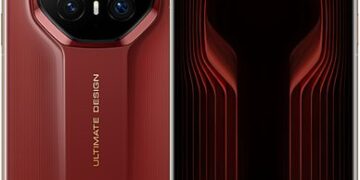






Huawei Mate 70 RS Ultimate Design (PLU-AL10) — Full technical review and practical assessment
Comprehensive review of the Huawei Mate 70 RS Ultimate Design (PLU-AL10): specs, cameras, display, battery, connectivity, release (Dec 19, 2024) and CNY 12,999 price.
The Huawei Mate 70 RS Ultimate Design (PLU-AL10) is a premium, China-market flagship introduced on November 26, 2024 and released December 19, 2024. This review synthesizes the device’s physical design, display technology, processing hardware, camera systems, battery and charging, connectivity and sensor set, audio and software features, and market positioning. Table of contents: Aesthetics, Materials and Handling; Screen Technology, Color and Motion; Silicon, Memory and Real-world Performance; Camera Architecture, Optics and Imaging Workflow; Power Management, Charging and Thermal Behavior; Connectivity, Sensors, Durability and Extras. The following analysis draws exclusively on the device’s specifications and describes how those specifications translate to real-world use cases, strengths, and practical trade-offs for buyers.
Aesthetics, Materials and Handling
The Mate 70 RS Ultimate Design projects the physical presence expected of a flagship whose emphasis is premium materials and tactile refinement. At 164.6 mm tall, 79.5 mm wide and 8.25 mm thick (3.13 x 6.48 x 0.32 inches), the phone is large by contemporary standards and sits squarely in the “phablet” category. It registers a mass of 256 grams (9.03 ounces), which is noticeable in hand or pocket but consistent with devices that combine large batteries, extensive camera hardware and dense materials in a luxury finish.
The hardware designer and manufacturer are both Huawei; the internal codename recorded for the unit is “Huawei PillarU.” That codename, and the model suffix “RS Ultimate Design,” suggest a variant focused on design treatments and an enhanced set of materials or finishes. The device supports dual SIM operation (Nano-SIM, dual standby) and ships in a 1 TB storage configuration for the PLU-AL10 model, positioning it toward power users and photographers who require local storage.
Handling and ergonomics reflect a balance of dimensions and weight. The 79.5 mm width helps stabilize a long 6.9-inch display during one-handed reach across the top portion of the screen only for users with larger hands; for many users two-handed operation will be the comfortable norm. The relatively slim 8.25 mm depth keeps the device feeling less bulky than its weight implies, but the 256 g mass means extended single-handed use or frequent pocket carry will be a conscious choice for buyers who prize screen size and battery life over featherweight portability.
The hardware includes haptic touch feedback as a general extra, and physical controls are typical of the category: tactile buttons for power and volume. Build quality is consistent with the Ultimate Design designation; expected materials are a mixture of metal and glass with precision machining and finish details. The presence of an infrared (IR) transmitter broadens utility for remote-control tasks and adds to the hardware versatility that premium buyers often expect.
The device avoids expandable storage — the datasheet lists no expansion interface — so the 1 TB fixed ROM is a decisive choice for storage capacity. In practice, that capacity supports large photo and video libraries, extensive local media collections, and storage-intensive workflows where cloud access is limited or undesirable.
Screen Technology, Color and Motion
The Mate 70 RS Ultimate Design uses a 6.9-inch AM-OLED panel with a 1316 x 2832 resolution and a pixel density of approximately 453 PPI. This resolution combined with the AM-OLED technology yields a high-contrast display with individual-pixel light control and deep blacks, and the 453 PPI figure indicates pixels are densely packed enough that content appears sharp at normal viewing distances. The display reports a color scale count of about 1,073.7 million colors and display area utilization of 89.4 percent, signaling a large active area relative to the device footprint.
A single front “hole” accommodates the selfie camera while minimizing intrusion into the viewing plane; bezel width is reported at 5.75 mm horizontally. The screen supports a 120 Hz refresh rate, which will make scrolling, animations and gaming feel smoother compared with traditional 60 Hz panels. For content that benefits from increased frame rates — user interface motion, high-frame-rate gaming, and system-level animations — the 120 Hz mode will be a clear usability win. When paired with the AM-OLED contrast and high color fidelity, the screen should perform strongly for media playback, photo review and content creation.
Resolution and refresh choices indicate a balance between pixel density and processing overhead. A 1316 x 2832 physical resolution is slightly nonstandard compared to common aspect ratios, but it produces the high pixel density and vertical real estate favored for long-form content and camera previews. The display supports 4K-class output through a DisplayPort-capable A/V output and a USB Type-C reversible connector that supports USB 3.0 / 3.1 Gen1 (USB SS 5 Gbps) speeds; this makes the device suitable as a content creation hub where tethering to external displays or transferring large files quickly is necessary.
Scratch resistance is present on the panel, which is a practical expectation on a device of this class. A practical note on display behavior: users who enable 120 Hz should monitor battery impact and allow adaptive modes where available to balance smoothness with endurance. The device’s display area utilization and hole-punch placement prioritize a near-edge-to-edge viewing experience while still accommodating the front camera and face-recognition sensors.
Silicon, Memory and Real-world Performance
At the heart of the Mate 70 RS Ultimate Design is a HiSilicon KIRIN9020 4G HD36C0 GFCV110 (reported as HiSilicon KIRIN9020 4G Hi36C0 GFCV110) chipset built on a 7 nm process. The CPU configuration is an octa-core, 64-bit design with a nominal CPU clock figure listed as 2500 MHz. The integrated graphical controller is the HiSilicon Maleoon 920 GPU with a reported clock of 840 MHz. While network capability centers on LTE rather than 5G, the SoC and GPU combination indicate a flagship-level compute platform tuned for sustained performance, efficient multi-threaded workloads and capable GPU throughput.
Memory architecture is high-end: 16 GiB of LPDDR5 SDRAM running at a 4266 MHz data rate. That capacity and bandwidth will benefit multitasking, memory-resident applications and large-photo editing on-device. The device includes a non-volatile memory interface and a 1,000 GB ROM (1 TB) in the model profiled; this combination of high RAM and large fixed storage supports pro-grade workflows, such as local RAW photo editing, long-form video capture and substantial offline archives.
Storage and connectivity are practical for workflows that rely on rapid file transfer; the USB 3.0 / USB SS (5 Gbps) interface and support for USB PD (including PD 3.1) make moving large files to a desktop and powering high-speed external peripherals feasible. The presence of DisplayPort over USB-C means the device can output high-resolution frames to external displays, which is useful for review and presentation.
Real-world performance expectations: the KIRIN9020 with the Maleoon 920 GPU and LPDDR5 memory should handle demanding applications including mobile gaming, photo processing and multitasking with minimal slowdowns. Sustained gaming performance and thermal behavior depend on SoC power management, chassis thermal design and software-level optimizations; the high-capacity battery and robust charging options mitigate short runtime concerns, but extended gaming sessions may still result in thermal throttling on any device with a densely packed flagship SoC.
Software on the device includes Huawei HarmonyOS 4.3 and EMUI 15, and software extras enumerated in the specifications include voice command, navigation software, augmented reality features, an intelligent personal assistant, voice and face recognition. These software elements will be tightly integrated with the hardware to manage device-level features such as face unlock, intelligent scene detection for photography and system-level assistant capabilities.
Camera Architecture, Optics and Imaging Workflow
Photography and video are focal points of the Mate 70 RS Ultimate Design’s hardware specification. The rear camera system is multi-lens and vertically integrated to cover wide, ultrawide and telephoto ranges plus a mono sensor for depth or detail capture. The primary rear sensor is listed as a 50.3 MP BSI CMOS with a variable aperture specification across elements: f/1.40 (wide) and f/4.00 (tele/zoom), supported by optical image stabilization (OIS) and electronic image stabilization (EIS) for video. The main lens reports a minimum equivalent focal length of 24.5 mm and supports 3.8x optical zoom with up to 26x digital zoom. Video capture capability for the main camera reaches 3840 x 2160 pixels (4K) at 60 fps, enabling high-resolution, high-frame-rate recordings.
Auxiliary rear cameras expand the system: an auxiliary camera at 39.9 MP with a 13 mm equivalent focal length and f/2.20 aperture is configured for ultrawide shots, and a 48.0 MP auxiliary 2 camera with 92.5 mm equivalent focal length and f/2.10 aperture provides dedicated telephoto reach. A mono 1.6 MP auxiliary sensor is also present for depth and specialized capture modes. The rear system includes a dual LED flash and implements a host of computational and capture features: HDR photo and video modes, pixel unification (for improved low-light sensitivity via pixel binning or fusion), burst mode, slow-motion video, panorama, refocus, touch focus, red-eye reduction, face detection, face tagging and face retouch features. Autofocus capabilities include contrast-detection AF (CD AF), phase detection AF (PD AF) and laser AF for fast lock-on and accurate focus, especially in mixed lighting.
The front-facing camera is a BSI CMOS sensor with 13.0 MP resolution and f/2.40 aperture. It supports 4K video capture at 30 fps and includes the same set of computational enhancements for face retouch, EIS and HDR video. For selfie and conferencing use cases the 13 MP front camera is well-suited to high-resolution video calls and portrait photography while maintaining robustness across lighting conditions.
Optical and computational workflow: the combination of multi-sensor optics, OIS and advanced autofocus methods allows the phone to cover most real-world shooting scenarios, from wide landscapes to stabilized telephoto shots. Pixel unification and HDR functionality are designed to enhance low-light and high-contrast scenes. The presence of a mono sensor typically assists in detail extraction and contrast fidelity, and the 3.8x optical zoom provides a genuine optical range that minimizes reliance on purely digital cropping compared with devices that only offer hybrid or digital zoom. The 4K60 video capability aligns with contemporary content creation needs while the array of stabilization and video HDR features supports professional-looking capture in handheld conditions.
Practical considerations for image quality: sensor sizes, lens construction and ISP tuning determine final image character; the specification set suggests the Mate 70 RS Ultimate Design is built to deliver crisp, high-detail stills, versatile framing via its multi-lens ensemble, and reliable video capture. The lack of explicit sensor element sizes and lens element counts in the spec sheet means reviewers should validate low-light performance, dynamic range, and telephoto sharpness in shooting tests, but the hardware feature set provides the necessary building blocks for excellent imaging results.
Power Management, Charging and Thermal Behavior
The Mate 70 RS Ultimate Design is equipped with a built-in single-cell Li-ion Si-C battery rated at a nominal 5,700 mAh. That is a large capacity figure and will be, depending on display settings and software power management, a significant differentiator in endurance compared with typical flagship batteries near 4,000–5,000 mAh. Real-world battery life will depend on user behavior: enabling the 120 Hz refresh rate, sustained gaming, continuous 4K video capture, GPS navigation and heavy network use increase consumption; conversely, adaptive refresh modes and power-optimized software can extend runtimes considerably.
Wired charging supports a maximum of 100 W, which allows for rapid replenishment of the large battery and makes the phone suitable for users who require quick top-ups during heavy usage days. Support for USB PD (including PD 3.1) through the USB Type-C reversible connector further standardizes charging and power-delivery compatibility. For wireless charging, the phone supports Qi wireless charging with a maximum wireless charging power of 80 W and includes Qi reverse wireless charging capabilities. An 80 W wireless charging spec is uncommon and indicates Huawei’s emphasis on fast wireless replenishment as an alternative to wired charging; in practice, real-world wireless charging speeds depend on charger compatibility, thermal constraints and the wireless charger’s design, but the specification suggests an aggressive wireless charging implementation.
Thermal behavior is a practical concern given the combination of a high-power SoC, large display and rapid charging. Manufacturers implementing high-watt charging and powerful processors typically pair these with thermal management solutions — vapor chambers, graphite sheets and tuned software throttling — to protect battery health and stabilize performance. The datasheet does not list a specific thermal architecture, so users should expect the manufacturer to use software and internal heat distribution to manage temperatures during heavy workloads such as long gaming sessions or prolonged 4K video recording while plugged in.
Charging and battery care guidance becomes important: with high charging rates available both wired and wireless, battery longevity can be preserved by avoiding constant 100% charge cycles and minimizing extended operation exposed to high ambient temperatures while charging. The large nominal capacity combined with rapid charging capabilities means that the device can recover usable charge quickly, and the presence of reverse wireless charging provides a convenient, if less efficient, method to power accessories on the go.
Connectivity, Sensors, Durability and Extras
Connectivity is comprehensive for LTE-era networks and local wireless ecosystems. The Mate 70 RS Ultimate Design lists a broad set of supported cellular bands across GSM, UMTS and an extensive array of LTE bands, including TD-LTE and FDD-LTE bands used widely across markets in Asia and elsewhere. Supported cellular data links include a range of LTE throughput classes (up to LTE 1600 and multiple speed/duplex designations), HSPA+, HSDPA and supporting legacy technologies like GPRS and EDGE. The device is explicitly 4G-capable rather than 5G, and that design decision aligns timelines and chipset choices with an LTE-focused performance envelope.
Local wireless connectivity includes Bluetooth 5.2, Wi‑Fi support across 802.11a/b/g/n/ac/ax (Wi‑Fi 6), Miracast, Wi‑Fi Direct, Wi‑Fi tethering and Wi‑Fi Calling. These services, plus USB host and OTG support, make the handset versatile for both personal and productivity use. NFC A and B are included for contactless interactions, transit and payment systems where supported.
The satellite navigation module is robust: simultaneous GPS, A-GPS, dual-frequency GPS, QZSS and NavIC are supported, alongside GLONASS L1OF, Galileo E1/E5a/E5b and BeiDou support on multiple bands and services. Dual-frequency and multi-constellation support improves positioning reliability and accuracy, which benefits navigation, location tagging and geotagged photography.
Sensors are comprehensive: a built-in compass, 3D accelerometer, 3D gyroscope, altimeter, barometer, fingerprint sensor (FP sensor), gesture sensor, hall sensor, ambient light sensor and proximity sensor are present, plus a step counter. Those sensors support a wide range of features from fitness tracking and navigation to adaptive display brightness, gesture interactions and secure biometric unlock.
Durability notes are notable. The datasheet records protection from solid materials as level 6 — “totally protected from dust” — and protection from liquids as level 9 — described as protection against “high temperature high pressure spray downs.” The datasheet also lists an immersion limit of 600 cm (6 meters) for 30 minutes. Those figures suggest a high degree of resistance to dust and water ingress, geared to robust field use and high-pressure environmental exposure. Buyers should verify manufacturer guidance and warranties regarding water resistance, and validate real-world limits in consumer testing, but the declared protection levels position this model as more rugged than devices with minimal ingress protection.
Audio and input peripherals include stereo loudspeakers, three microphones and USB Type-C audio output. The bottom speaker has been engineered with a dual-diaphragm arrangement to manage both high and low frequencies — a hardware detail that improves frequency separation and overall loudness when compared with single-diaphragm solutions. The presence of three microphones supports improved noise suppression, multi-directional pickup, and higher quality voice recording.
Software extras are oriented toward productivity and intelligent user interaction. HarmonyOS 4.3 and EMUI 15 provide an interface layer that exposes voice command, navigation software, augmented reality features, intelligent personal assistant capabilities, voice recognition and face recognition. These features are integrated into camera functions (intelligent scene detection), phone services (VoLTE, ViLTE) and broader device interactions (face retouch, face tagging and AR experiences).
Market placement and pricing are explicit: the Mate 70 RS Ultimate Design is targeted at the China market and, more broadly, the Asia region. The recorded retail price is CNY 12,999, a figure that places it in the luxury flagship bracket where material treatment, camera sophistication and storage options are premium selling points. Availability outside the listed market will depend on regional strategies and partner distribution.
Practical implications for connectivity and daily use: the lack of 5G may influence buyers with explicit 5G requirements, but the extensive LTE band support, advanced Wi‑Fi 6 capability and robust GNSS suite make the phone suitable for users who need reliable data access, accurate positioning and advanced local networking. The combination of USB PD support and high-speed wired and wireless charging makes the device a powerful portable workstation companion.
Final assessment guidance
The Huawei Mate 70 RS Ultimate Design combines deliberate hardware choices to appeal to a narrow but ambitious buyer profile: those who value a large, high-quality display, advanced imaging hardware, extensive local storage and rapid charging options, and who accept a device with substantial size and mass in exchange for endurance and capability. The use of a high-capacity 5,700 mAh battery and fast wired (100 W) and wireless (80 W) charging, paired with a large AM-OLED panel and 16 GiB of high-speed LPDDR5 RAM, creates a durable platform for creative and productivity tasks.
There are trade-offs. The phone’s weight and dimensions prioritize capability over compactness; the absence of expandable storage places a premium on the factory 1 TB option; the chipset’s LTE-only modem excludes 5G connectivity. For photographers and videographers who prioritize sensor count, optical zoom range and software imaging features, the multi-lens rear module and 4K60 video capture are compelling. For power users who value local storage, rapid file transfer via USB 3.0 and DisplayPort output, and a large battery with rapid recharge, the hardware is directly aligned with those needs.
Positioning, price and market availability reflect a high-end, design-focused flagship approach. The released pricing of CNY 12,999 places the phone among luxury-tier devices in China and nearby markets and signals a focus on exclusive finish, high storage capacity and premium hardware specifications rather than entry- or mid-range mass-market pricing.
A buyer checklist
- Needs: large display (6.9"), strong camera system with optical zoom, and extensive local storage (1 TB).
- Wants: long battery life and very fast charging including wireless, HDMI/DisplayPort output via USB-C, advanced sensors and strong build protection.
- Trade-offs: size and weight (256 g), no expandable storage, no 5G modem.
- Recommended if: local storage, imaging versatility, and design/finish are high priorities.
- Consider alternatives if: compact size, 5G connectivity or lower price are essential.
Final paragraph
The Huawei Mate 70 RS Ultimate Design (PLU-AL10) is a purpose-built flagship for users who prioritize display size, camera versatility, high-capacity local storage and rapid charging within a premium build. Released in China on December 19, 2024 after its announcement on November 26, 2024, the model combines a 6.9-inch AM-OLED 120 Hz panel, a multi-lens rear imaging assembly with optical zoom and 4K60 video, a high-capacity 5,700 mAh battery with 100 W wired and 80 W wireless charging, 16 GiB LPDDR5 RAM and 1 TB of onboard storage, plus a comprehensive sensor suite and advanced software features; these specifications make it a strong choice for creative professionals and power users willing to accept the device’s considerable physical footprint and LTE-focused connectivity in return for its capability set and luxury positioning.