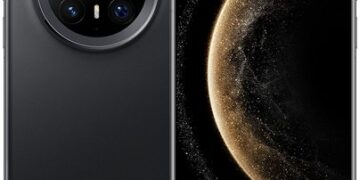






Huawei Mate 70 Pro Global Dual SIM detailed review and technical analysis
Comprehensive technical review of the Huawei Mate 70 Pro Global with 6.9 inch LTPO AM OLED display, HiSilicon KIRIN9020 chipset, 50 megapixel main camera, 5500 mAh battery, and 100 W fast charging
The Huawei Mate 70 Pro Global Dual SIM is an upper mid range smartphone that blends a large LTPO AM OLED display with a bespoke HiSilicon KIRIN9020 application processor and a camera system tuned for flexibility across wide angle, ultra wide and telephoto shooting. This article provides a rigorous technical profile and practical evaluation covering design, display, performance, imaging system, battery and charging, connectivity and software, followed by implications for different user types and buyer guidance. Contents of this article are organized into the following parts for quick navigation and focused reading
- Materials size and durability
- Display and audiovisual capabilities
- Processor memory and storage architecture
- Camera system and imaging features
- Battery charging and connectivity ecosystem
- Software sensors and location services
Each section examines specifications then explains real world implications and trade offs for professionals and everyday users. The article concludes with a concise appraisal and purchasing guidance.
Materials size and durability
Huawei designed the Mate 70 Pro with physical dimensions and a materials package intended to support a large screen while keeping the device usable in hand and resilient to daily hazards. The phone measures 164.6 mm in height, 79.5 mm in width and 8.2 mm in depth, converting to approximately 3.13 by 6.48 by 0.32 inches. Its mass is 221 grams, or 7.8 ounces, a weight that places it in the heavier tier among modern large display devices but is in line with the battery capacity and camera hardware it houses.
The display is protected by a second generation Crystal Armour Kunlun glass solution, a tougher chemistry intended to reduce fracture and deep scratches compared with standard display laminates. The datasheet also flags a scratch resistant screen and haptic touch feedback as part of the user experience. Those features together reduce the likelihood of everyday screen damage and help the device retain a premium feel during use.
Ingress protection is specified using two protection dimensions. For solids the level is indicated as 6, denoting full dust protection. For liquids the level is indicated as 9, described as protection against high temperature high pressure spray downs. Practically this means the device is intended to operate reliably in wet conditions where pressurized water or spray is present, and it is sealed against dust intrusion. The listed immersion depth equivalent is 600 centimeters for a time limit of 30 minutes. Those values combine to a robust environmental protection profile suitable for heavy use outdoors and in scenarios where exposure to dust or strong water jets is possible. Note that repairability and access to internal components are not detailed in the specification set provided here. Users intending to perform self repair should expect a sealed build and factory procedures for service.
The device profile suggests a careful balance between large screen real estate and physical ergonomics. The width of 79.5 mm means that despite the 6.9 inch diagonal display, the body remains within a tolerable band for two handed use and for many one handed tasks. The relatively slim depth of 8.2 mm and the use of premium face and back materials aim to minimize perceived bulk. The final weight is a consequence of the large 5500 mAh battery and the metal and glass construction required to maintain durability and wireless charging performance.
In practical terms the Mate 70 Pro will feel substantial in the hand but not unwieldy. Users who prioritize the longest possible battery life and advanced camera modules commonly accept this weight. For pocket comfort the device will be noticeable when carried in slim pockets but will still sit comfortably in jacket or bag compartments. The combination of tougher Kunlun glass and high ingress protection means the phone is better suited than many competitors to active users who work in outdoor or industrial environments where dust and spray are common.
Display and audiovisual capabilities
The Mate 70 Pro puts display technology at the center of its user experience. Huawei specifies a 6.9 inch LTPO AM OLED panel with a resolution of 1316 by 2832 pixels. That resolution yields a pixel density of 453 pixels per inch, which delivers crisp text and fine detail for reading, video and image editing tasks. The screen supports 1073.7 million display scales and employs an AM OLED architecture, which is known for deep black levels, high contrast and efficient power usage for static or dark content.
A major practical advantage of an LTPO panel is dynamic refresh scaling. Huawei sets the display refresh rate at a maximum of 120 Hz. LTPO circuitry allows the refresh rate to scale down to lower frequencies as needed, which reduces power consumption during static content or screen idle intervals while preserving the smooth high refresh experience for animations and supported applications. The combination of 120 Hz peak and LTPO backing is ideal for users who demand fluid UI interactions and want improved battery efficiency during mixed usage.
The reported display area utilization is 89.4 percent. This figure reflects a design focus on narrow bezels and a high screen to body ratio. The horizontal full bezel width is 5.75 mm which indicates a thin surrounding edge that contributes to immersion. The panel uses a single hole punch for the front camera, kept minimal to preserve usable screen real estate.
Display durability is emphasized with a scratch resistant treatment and the aforementioned second generation Crystal Armour Kunlun glass. In addition the phone supports USB Type C reversible connections with DisplayPort output. That support allows the phone to drive external displays or to use wired screen sharing at higher quality, useful for presentations and media playback. Wireless display services are also present through Miracast and Wi Fi Direct for cable free screen casting.
Audio output is stereo with built in loudspeakers and three microphones. Stereo loudspeakers deliver better left right separation for video and gaming compared with single mono drivers. The three microphone array assists voice clarity for calls and improves capture quality for video and audio recording. USB Type C is the primary audio output interface. The device also supports a comprehensive set of audio and video codecs in software and includes software level enhancements such as EIS and OIS integrated into camera capture which contribute indirectly to audiovisual content quality.
On balance the display and audio subsystem suite of the Mate 70 Pro underscore its suitability as a media consumption and content creation device. The large, high density panel with LTPO power adaptive refresh, combined with wired DisplayPort output and stereo speakers, make it a flexible tool for watching high resolution video, editing photos and clips on the go, and delivering on screen presentations without compromise.
Processor memory and storage architecture
Performance on the Mate 70 Pro is anchored by the HiSilicon KIRIN9020 4G system on chip. The model in this specification set is identified as Hi36C0 GFCV110, a 7 nanometer design with an octa core CPU. The listed CPU clock is 2500 MHz. The graphical subsystem is the HiSilicon Maleoon 920 GPU with a GPU clock reported at 840 MHz. This hardware combination represents Huawei vertical integration of modem, application processor and graphics processing elements, tuned for compatibility with the device features and for performance across everyday productivity and multimedia tasks.
Memory is implemented with LPDDR5 SDRAM, a modern mobile memory class that offers high bandwidth and low power consumption. The RAM databus clock is listed at 4266 MHz and the device ships with 12 GiB of RAM. That capacity and speed profile place the phone in a range capable of sustained multitasking, keeping many large apps resident and facilitating high performance mobile gaming and content editing workflows that demand memory headroom.
Storage is a generous 512 GB of non volatile memory. The datasheet indicates a non volatile memory interface is present, and the 512 GB capacity is not expandable through removable storage, as expansion interfaces are marked as not available. For most users 512 GB will be ample for a large library of photos and videos, high quality offline media, and multiple installed apps and games. Power users who require more space for raw video files or large datasets should plan to use cloud storage or external backups because there is no micro SD expansion slot.
Connectivity between storage and processor is served by a USB 3 class interface that provides USB SuperSpeed at 5 Gbps. The device supports USB Host, USB OTG versions, and USB Power Delivery up to versions 2.0 and 3.1 with related services that include wired fast charging. The presence of high speed USB makes tethered file transfers to a laptop or external storage speedy, which is valuable when moving multi gigabyte video clips captured at high resolution.
The chipset selection trades off raw maximum cellular modem generation for integration with Huawei system level features. This global variant emphasizes a broad LTE band inclusion set and supports high throughput LTE link profiles. It is notable that the chipset entry does not indicate native 5G support on this global variant. Users seeking 5G connectivity should confirm variant specific modem capabilities with their vendor prior to purchase, given modem differences across regional SKUs.
Combined the hardware stack positions the Mate 70 Pro as a powerful and balanced device for sustained multimedia use, camera processing, and advanced multitasking. The KIRIN9020, LPDDR5 at 4266 MHz, and 12 GiB RAM compose a platform that will handle demanding applications reliably while the 512 GB of fixed storage targets users who value local capacity and fast wired payload movement.
Camera system and imaging features
Camera capability is central to the Mate 70 Pro proposition. The primary rear camera uses a 50.3 megapixel BSI CMOS image sensor with a wide aperture optical path reported at f1.40 for the wide configuration and a narrower tele aperture measured at f4.00. The main module supports optical zoom at 3.8 times and digital zoom up to 26 times, delivering a versatile focal range that covers standard, portrait and substantial reach telephoto captures.
Optical and motion stabilization are implemented through OIS and EIS for both stills and video. The camera system supports 3840 by 2160 pixel video recording at 60 frames per second, which equates to a 4K60 capture capability for smooth high resolution video. Autofocus capabilities are comprehensive, including PDAF and laser assisted focus, and contrast or phase based mechanisms described as CD AF as part of mixed focus strategies. The camera suite also features pixel unification, an approach commonly used to combine pixels in low light to improve effective sensitivity and reduce noise while preserving color fidelity.
Optical characteristics include a minimum equivalent focal length for the primary module at 24.5 mm. Flash is dual LED to improve subject illumination without overwhelming color rendering. The main camera function set also includes HDR photo and HDR video capture, slow motion video, burst mode, panorama and both touch focus and face detection. Intelligent scene detection and face retouch for both photo and video are integrated, along with refocus capabilities that allow post capture re framing in certain shooting modes.
Auxiliary rear camera modules extend the kit. An auxiliary wide or ultrawide camera is specified at 39.9 megapixels with an aperture of f2.20 and an equivalent focal length of 13 mm. This module is suited for landscape, architecture and group shots where a wide field of view and high resolution detail are both important. A secondary tele oriented module is documented as 48 megapixels with f2.10 aperture and a 92.5 mm equivalent focal length. That tele module and the main module together enable the optical 3.8 times zoom and contribute to the device optical reach without relying solely on digital cropping.
An additional mono camera is present at 1.6 megapixels. Mono sensors often serve purposes such as depth mapping, improved luminance detail or low complexity monochrome captures. The limited resolution suggests a role in auxiliary data capture rather than primary high fidelity imaging.
The front facing or selfie camera is specified as a 13 megapixel BSI CMOS with f2.40 aperture. The selfie camera supports 4K video at 30 frames per second and includes EIS and the same suite of software enhancements found on the rear system. This makes the phone suitable for high quality front facing video capture and live streaming scenarios.
In real world terms this hardware combination is flexible and capable. The high resolution main sensor combined with pixel unification and OIS provides a good foundation for low light photo capture and stabilized video. The 3.8 times optical zoom and dedicated 48 megapixel tele module preserve image detail at moderate distances where single lens systems would need to rely heavily on digital zoom. The ultrawide 39.9 megapixel sensor is a notable advantage for users who want higher fidelity wide angle imaging compared with lower resolution ultrawide modules on many competing devices.
Software features such as HDR video, intelligent scene detection and multiple autofocus systems enhance practical usability. Users can expect broad automatic correction and intelligent adjustments in mixed lighting. For professionals who want manual control the presence of EIS OIS and a broad focal range will be helpful, but the specification set does not detail RAW capture bit depth or advanced manual capture modes such as full pro level log video. Those users should verify software capture options on retail firmware or carrier releases if studio grade capture is a primary requirement.
Battery charging and connectivity ecosystem
The Mate 70 Pro is built around a 5500 mAh built in Li ion polymer battery. This capacity is large by contemporary standards and is consistent with the device mass and the ambitions for extended use without frequent recharge. Battery capacity alone does not determine runtime, it interacts with display characteristics, chipset efficiency and network usage patterns. The LTPO panel and adaptive refresh capabilities help offset the power demand of a large 6.9 inch screen, while the KIRIN9020 7 nm architecture supports energy efficient compute.
On the charging front the device supports wired fast charging at a maximum of 100 W. That level of wired power allows for very rapid top ups when using a compatible high power USB PD charger and cable. Wireless charging is supported through Qi and the device is rated for up to 80 W wireless charging. Wireless reverse charging is also available for powering accessories or other devices. These wireless charging power levels are significantly high compared with typical wireless implementations and indicate special engineering to maintain thermal limits while achieving high power throughput.
USB connectivity uses a USB C reversible connector. The USB implementation supports USB 3 class SuperSpeed at 5 Gbps plus high speed 480 Mbps compatibility. USB services include USB Host, USB OTG versions 1.3 and 2.0, and USB Power Delivery versions including 2.0 3.0 and 3.1. Those services collectively make the phone useful as a wired hub for peripherals, external storage, and for rapid transfer and charging workflows.
Wireless connectivity is extensive. Bluetooth 5.2 is present, offering robust pairing and improved audio and low latency performance with compatible accessories. Wi Fi features include support for 802.11 a b g n ac and ax. The Wi Fi ax support enables improved multi device performance and higher throughput in compatible networks. Wireless services include Miracast Wi Fi Direct Wi Fi Tethering and Wi Fi Calling which cover common screen sharing peer to peer media sharing hotspot and voice over Wi Fi scenarios.
NFC functionality is included with support for both NFC A and NFC B types, enabling contactless payments and secure pairing where accepted. An infrared emitter is present with data rate support, allowing the phone to be used as a remote control for a wide range of consumer electronics. GPS and satellite navigation services are comprehensive and described below in the software and location section.
On the cellular front the device is designed as a global LTE centric handset with dual SIM dual standby operation using two Nano SIM slots. The Mate 70 Pro includes a very broad list of LTE bands across FDD and TD modes covering GSM UMTS and a wide selection of LTE bands including regional allocations for Europe Asia the Middle East and parts of Africa and Central Asia. TD LTE bands are explicitly supported including mid band and higher frequency TD allocations used by regional carriers. The supported cellular data links include a wide array of LTE throughput profiles up to high aggregated speeds indicating a modem capable of advanced LTE carrier aggregation and uplink downlink configurations. For buyers it is essential to check the precise band support against a target carrier especially for some less common regional bands and for compatibility with advanced carrier features.
Practical implications of the power and connectivity package are straightforward. The large battery combined with adaptive refresh and power efficient silicon points to long single charge runtimes for mixed use. Very fast wired charging and very fast wireless charging offer flexibility depending on available chargers and user preference. The inclusion of USB 3 speed and DisplayPort over USB C makes the phone convenient for content creators and professionals who need fast file transfers and external display support. Dual SIM operation and the extensive LTE support make the device convenient for international travelers who rely on regional SIMs.
Software sensors and location services
The Mate 70 Pro ships with an Android based platform. The operating system entry in the specification lists Google Android 12 S as the platform and EMUI 15 as the system skin. EMUI is Huawei’s long running customization that adds device specific services and feature integrations. The software extras included in the specification set indicate voice command navigation software augmented reality intelligent personal assistant voice recognition face recognition and other convenience features. These software extras support a modern smartphone experience that emphasizes voice and AI assisted features for hands free interactions and enhanced contextual services.
The phone is equipped with a comprehensive sensor suite. Core inertial sensors include a 3D accelerometer and a 3D gyroscope. Orientation is completed with a built in compass. Additional sensors include an altimeter and a barometer which are beneficial for activity tracking elevation aware tasks and environmental sensing. A fingerprint sensor is listed in the additional sensors entry; this complements face recognition for biometric unlocking. The device also includes gesture sensing hall effect proximate and ambient light sensors and a step counter for fitness tracking.
Location services are strongly supported. The platform lists simultaneous GPS, A GPS and dual frequency GPS capability which improves positioning accuracy particularly in urban canyons and challenging environments. Complementary satellite services include QZSS and NavIC for regional augmentation where available. GLONASS support is recorded with protocols listed and Galileo services include E1 E5a and E5b support. BeiDou system receivers include B1c B1I B2a and B2b bands. The summed capability of these multi constellation multi frequency services provides high accuracy location performance for navigation mapping and location based applications.
Camera and motion sensors use fused data to enhance stabilization subject tracking and augmented reality features. The phone’s software extras list augmented reality native support which will leverage the camera and sensor array in tandem. The combination of dual frequency GNSS and precise inertial tracking is valuable for mapping professionals augmented reality developers and any application requiring reliable position and orientation data.
Security and convenience features extend beyond biometrics. The phone supports face recognition and an intelligent personal assistant which can accept voice commands. EIS OIS and software based stabilization for video are present which help improve capture quality in motion. The operating system generation and EMUI version suggest that Huawei provides a packaged experience of Google based Android features modified by Huawei specific services offering unique integrations and optimizations.
From a user perspective the software and sensor platform makes the Mate 70 Pro appropriate for advanced mobile workflows. Photographers and videographers benefit from stabilized capture and GNSS tagging. Fitness enthusiasts and outdoor users gain from altimeter and barometer sensing. Developers can rely on a modern sensor stack for augmented reality and navigation tasks. Enterprise users will find voice and biometric unlock useful for secure and efficient access control, subject to corporate security policies and provisioning.
Final appraisal and buyer guidance
The Huawei Mate 70 Pro Global Dual SIM is positioned as an upper mid range device with strengths in display quality camera flexibility battery capacity and an integrated hardware and software package tailored for multimedia, navigation and multi SIM global usage. Its 6.9 inch LTPO AM OLED panel with 120 Hz peak refresh, combined with a high capacity battery and dual high power charging options provides an attractive balance of performance and endurance. The imaging system is comprehensive with a high resolution main sensor optical zoom and dedicated tele and ultra wide modules, plus a strong set of software features for stabilization and scene optimization.
Performance is driven by a 7 nanometer HiSilicon KIRIN9020 chipset, 12 GB of LPDDR5 RAM and a 512 GB fixed storage configuration. For users who prioritize local capacity and fast wired transfers the USB 3 SuperSpeed capability is a material advantage. Connectivity is broad across Wi Fi Bluetooth NFC IR and a wide selection of LTE bands in FDD and TD modes. Dual SIM dual standby operation using two Nano SIM slots supports international travel and flexible carrier arrangements.
The device has robust ingress protection for dust and high pressure spray downs and uses enhanced display glass for scratch resistance and impact tolerance, which will be appreciated by heavy users and those in demanding environments. The phone is heavier than many compact models, a direct consequence of the large battery and advanced camera modules. Buyers should weigh the physical feel against the benefits of extended battery life and advanced capture capability.
Who should consider this phone
- Mobile photographers and content creators who seek optical zoom, high resolution ultrawide capture and 4K60 recording in a pocketable device
- Users prioritizing long battery life and very fast charging options including high power wireless charging
- Professionals who need wired DisplayPort output and USB 3 speed for fast video transfers and external displays
- International travelers who require dual SIM operation and broad LTE band support across multiple regions
Who might look elsewhere
- Buyers requiring native 5G support in all markets should verify regional variants as this global dual SIM listing emphasizes LTE band coverage
- Users who need expandable storage through micro SD cards since expansion interfaces are not present
- Consumers who prioritize extremely lightweight or compact form factors since the Mate 70 Pro is built around a large screen and 5500 mAh battery
Practical buying recommendations
- Verify the exact regional variant for modem and band compatibility with your carrier and for any local regulatory differences
- Confirm the included charger and cable specification if you intend to use the 100 W wired or 80 W wireless charging features
- Evaluate protective accessories that preserve access to wireless charging and maintain ingress protection while offering additional drop resistance
- If RAW capture or studio oriented video workflows are critical, check available firmware capture modes and bit depth support prior to purchase
The Mate 70 Pro delivers a combination of large adaptive display advanced charging, and a versatile camera array that will serve demanding everyday users and creators well. It is engineered to balance endurance, imaging versatility and connectivity, while the robust sealing and reinforced glass improve longevity for active users. For buyers seeking a large display multimedia workhorse with strong camera optics and modern connectivity the Mate 70 Pro warrants close consideration
This review used the device specification record covering the global dual SIM PLR LX9 PLR L29 configuration and focuses on the precise hardware and software details supplied in that record. The device was announced on 2025 Feb 18 and released on 2025 Feb 27.