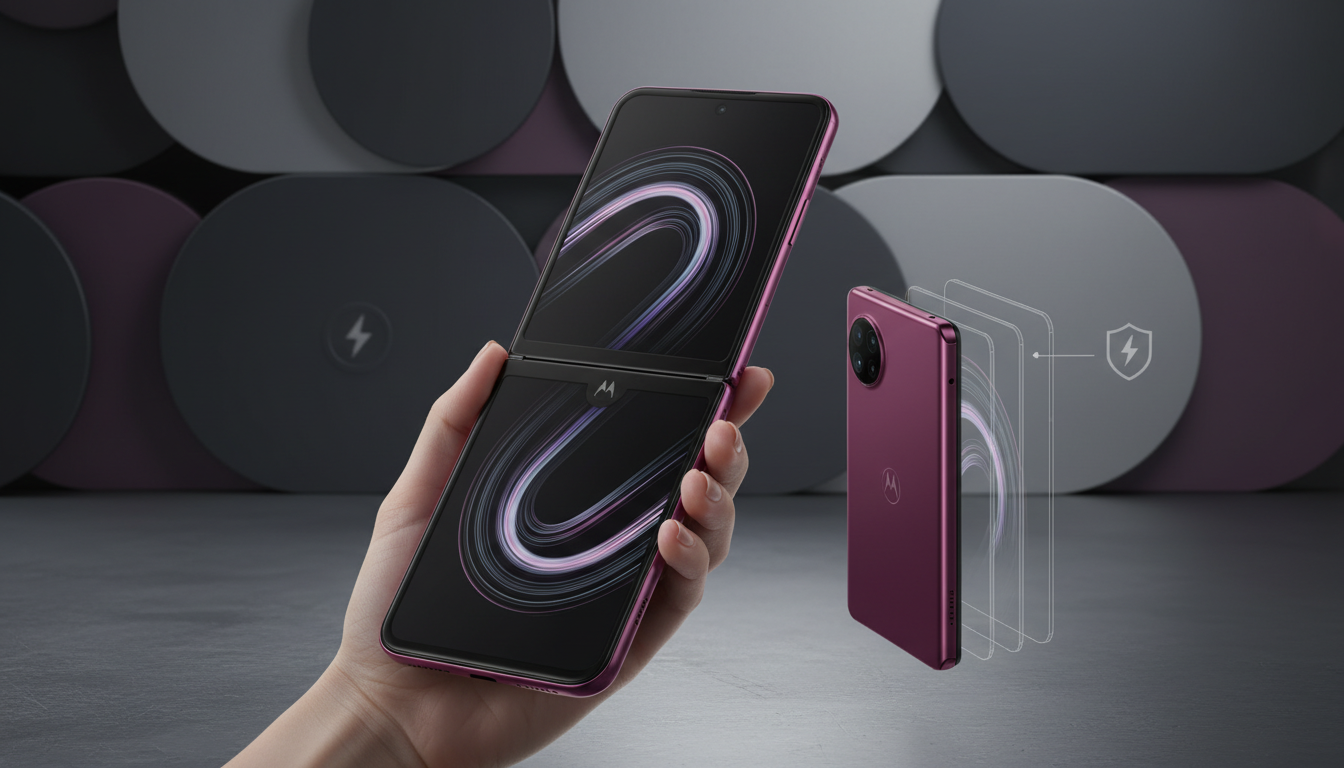






Motorola Razr Fold Hands-On Review: Sleeker Design, Bigger Battery Focus, Summer Launch Tease
Early hands-on review of the Motorola Razr Fold highlights a sleeker, thinner design, improved durability, and a larger battery, with a summer 2026 launch planned in the US.
Luxury Fit and Finish
Motorola’s upcoming Razr Fold leans into a premium aesthetic that feels purpose-built for people who treat their phone as both tool and accessory. The chassis presents clean lines, tight seams, and a finish that reads more luxury than techy. In hand, the device comes across as balanced when opened and satisfyingly compact when shut, with materials that avoid the smudgy sheen common to glossy foldables. Buttons land under natural finger rests and exhibit a consistent click, and the hinge action feels smooth rather than springy. Nothing about the hardware screams for attention; instead, it communicates restraint and polish, the kind of design that disappears while you use it and stands out when you set it on a table.
Slimmer Profile and Refined Hinge
Thickness has been a recurring sticking point for clamshell foldables, and Motorola is directly addressing it here. The Razr Fold aims for a slimmer profile when closed and a flatter plane when opened, improving both pocketability and typing comfort. The hinge resists wobble, opens with a steady arc, and settles without a snap, helping the inner display feel supported across its span. Crease visibility appears controlled at normal viewing angles, and the fold line is less distracting during scrolling than on earlier-generation devices. The hinge also holds a range of positions for tabletop video calls or time-lapse shooting, a practical touch for people who prefer going tripod-free. The overall effect is a phone that folds for convenience without reminding you of that compromise each time you unlock it.
Durability Targets for Daily Folding
Motorola is emphasizing durability alongside design. The company discussed tougher materials and long-term wear testing intended to keep the hinge action consistent over years of daily use. The frame feels rigid against torsion, and tolerances around the hinge cover look tightened to reduce ingress points. While detailed lab metrics and ratings were not provided, the message is clear: fewer creaks, fewer worries about micro-movements over time, and better protection against the repetitive stress that defines clamshell ownership. Edges and corners have been subtly rounded to disperse impact energy, and the outer surfaces feel ready for life in a bag or jacket pocket. For people who hesitated on earlier foldables due to longevity concerns, this focus on durability is a meaningful signal.
Battery Capacity and Charging Outlook
Battery life is a practical priority for a phone that invites frequent flips open and closed, and Motorola is positioning the Razr Fold with a larger capacity than previous entries in the line. The goal is straightforward: deliver full-day endurance without forcing users into aggressive power-saving modes. Charging details remain under wraps, but the company’s comments point toward a balanced approach that avoids excessive heat while still moving the percentage upward quickly when you need a top-off. The internal layout appears optimized to distribute cells for better weight balance, which helps the phone feel less top- or bottom-heavy in hand. If Motorola’s execution matches its intent, owners should expect reliable stamina for messaging, navigation, streaming, and camera use without constant outlet anxiety.
Displays and Everyday Experience
A clamshell lives or dies by its screens. The inner panel looks bright, punchy, and well-calibrated out of the box, with smooth scrolling that keeps text and UI elements sharp during fast movement. The outer display remains a signature convenience: quick glances for notifications, timers, weather, and media controls reduce the need to open the phone for every task. This division of labor helps the battery story; checking a message or skipping a track on the cover screen sips far less energy than lighting up the bigger canvas inside. Touch response is consistent on both displays, and gestures feel accurate across edges. Small refinements—like adaptive brightness that avoids sudden jumps and a reliable raise-to-wake—add up to a device that stays out of your way.
Who the Razr Fold Seems Built For
This iteration of the Razr Fold feels tailored for users who value compactness and style but will not give up daylong reliability. Travelers and commuters benefit from the slimmed-down pocket profile, students and hybrid workers get a self-standing screen for calls and content, and anyone who juggles notifications will appreciate the outer display triage. People seeking a spec-sheet arms race may need to wait for full disclosures on chipset, camera hardware, and charging wattage, which were not detailed during this preview. Still, the direction is clear: Motorola is refining the fundamentals that matter most to clamshell life—size, durability, and endurance—rather than chasing novelty for its own sake.
Based on these early impressions, the Razr Fold is shaping up as a thoughtful evolution that prioritizes the everyday realities of owning a foldable. The hardware feels more mature, the hinge inspires confidence, and the focus on a larger battery addresses a common pain point without inflating the device’s footprint. With a summer 2026 launch window on the horizon, the remaining questions center on camera performance, long-term crease visibility, and final software polish. If Motorola lands those details, this could be the clamshell that convinces fence-sitters to fold for the first time and gives current owners a compelling reason to upgrade.