
Xiaomi 17 Ultra Review: Can the Leitzphone Replace a DSLR?
Xiaomi 17 Ultra Leitzphone review: a $2,300 flagship with a massive LOFIC sensor, Leica optics, mechanical Master Zoom Ring and Snapdragon 8 Elite performance.
Camera System and LOFIC Sensor
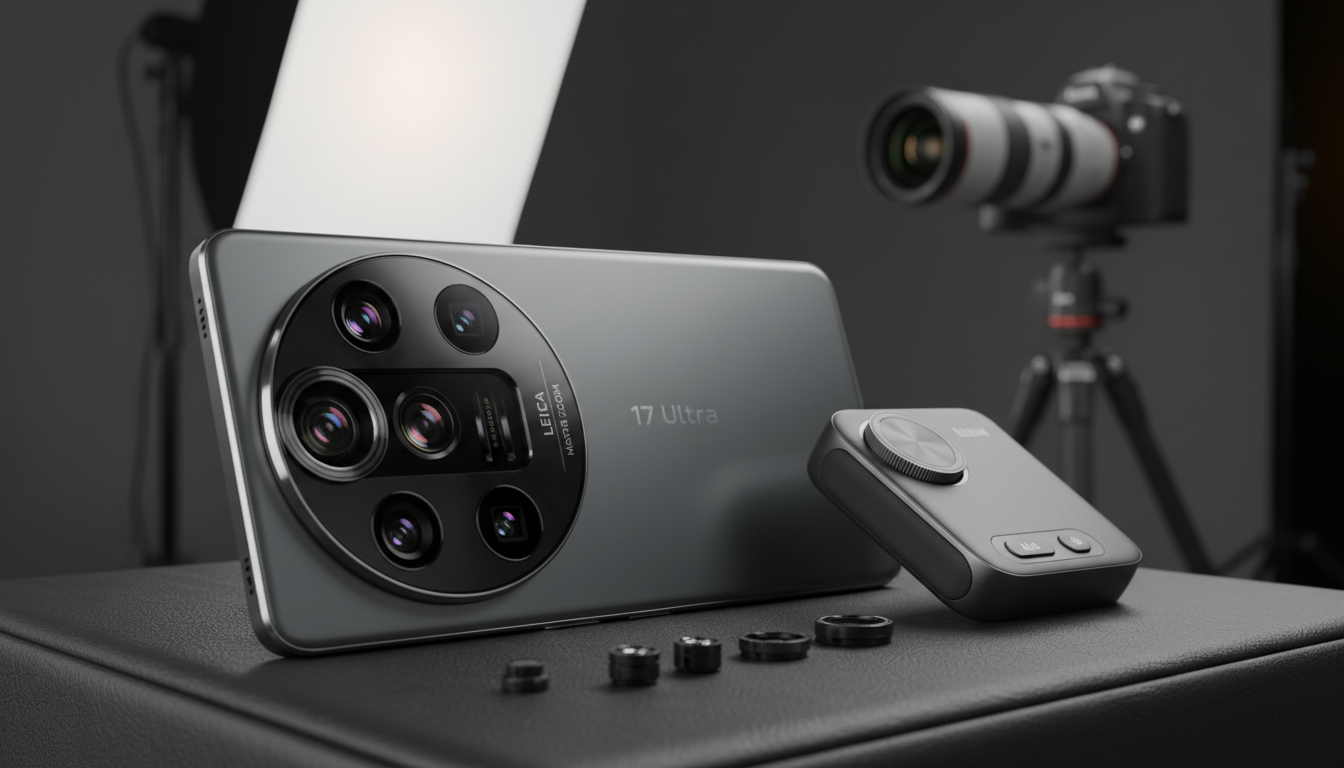
The Xiaomi 17 Ultra centers its appeal on a “massive LOFIC sensor” paired with professional-grade Leica optics. That combination aims to deliver larger light-gathering capacity than typical smartphone sensors, improved dynamic range and a shallower depth of field for subject separation. Leica’s involvement influences optical design and color rendering, with physical lens geometry and tuning intended to produce predictable contrast, accurate midtones and restrained color processing. The result is a camera stack engineered to favor image quality over computational over-processing, while still benefiting from a modern phone’s on-device processing and RAW capture options for advanced editing.
Master Zoom Ring Mechanical Control and Handling
A standout hardware feature is the mechanical Master Zoom Ring, which provides a tactile zooming interface uncommon in phones. The ring gives discrete control over focal length and can make framing more deliberate and camera-like, aiding in both stills composition and video pulling. Ergonomically, the ring changes how photographers hold and operate the device: it creates physical feedback and a sense of continuity between lens movement and subject framing. For users who prize manual control and a hands-on shooting workflow, the ring reduces reliance on on-screen gestures and can improve responsiveness in quick framing adjustments.
Image Quality and Real-World Shooting
In practical shooting, the phone’s optical elements and large sensor combine to deliver strong low-light performance, reduced noise at higher ISOs and richer highlight retention than many flagship peers. Portraits show smoother tonal transitions and more natural skin rendering when Leica profiles are applied. Telephoto reach benefits from optical elements rather than heavy digital crop, preserving detail and contrast at extended focal lengths. Dynamic range is improved in challenging scenes, allowing for recoverable shadow detail and controlled highlights. That said, the limitations inherent to a fixed-body phone remain: depth-of-field control cannot match large interchangeable-lens cameras, and extreme telephoto or ultra-wide specialty lenses still outperform a built-in system in reach and perspective control.
Performance Video and Software Experience
Under the hood the Xiaomi 17 Ultra uses a Snapdragon 8 Elite platform, which provides headroom for complex image processing, fast autofocus, and smooth interface responsiveness. Day-to-day tasks, pro camera modes and video recording benefit from the platform’s processing throughput. Video capabilities are supported by the optical hardware and software stabilization, and the mechanical zoom ring can be used for controlled zoom pulls during recording. Software remains an important part of the experience: Leica-inspired image profiles, manual exposure controls and RAW support are necessary for professional workflows, and the phone’s implementation determines how much of the sensor’s potential is realized in final files.
Price Positioning and Who Should Buy It
At a $2,300 price point the Xiaomi 17 Ultra targets a niche between flagship smartphones and entry-level mirrorless systems. For photographers seeking a compact device that emphasizes lens quality, tactile controls and a signature color profile, it represents a compelling single-body option. It also appeals to content creators who want a powerful phone for both stills and video with more manual input than typical handsets. However, the device is unlikely to supplant an interchangeable-lens DSLR or mirrorless system for professionals who require a broad selection of lenses, larger sensors with superior depth-of-field control, or advanced flash and accessory ecosystems. The phone can reduce the need for a full camera rig in many scenarios, but trade-offs remain for specialized professional work.
The Xiaomi 17 Ultra is a clear effort to bridge phone convenience and photographic intent: its large sensor, Leica optics and mechanical zoom control make it one of the most photography‑focused smartphones available. For users who prioritize portability, tactile controls and a distinctive optical character, it delivers a close approximation of a camera-like experience in a single device. For photographers who depend on interchangeable lenses, specialized optics or the physical advantages of larger sensors, a traditional camera system still offers capabilities the phone cannot fully match.